Third Weekend of French Protests Draws Smaller Crowds
For a third weekend in a row, people marched across France against rising living costs and strained public services. Around 320,000 took part on Saturday, according to the interior ministry, down from 410,000 a week earlier. Students, trade unions and Yellow Vest protesters, an anti-establishment movement, joined the marches. Most stayed peaceful, France 24 reported on October 31, though police fired tear gas in Lyon and Toulouse.
The movement began with students in September, angered by overcrowded classrooms and a university admissions system many see as unfair, as the minority government of President Emmanuel Macron opened talks on its 2027 budget. Turnout was highest at 550,000 on October 17, when riots and looting damaged shops and public buildings. This Saturday, 70,000 marched in Paris on a route along the eastern boulevards, after France's top administrative court upheld a ban on a march between the squares of Nation and Bastille. Far-left leader Jean-Luc Mélenchon walked at its head.
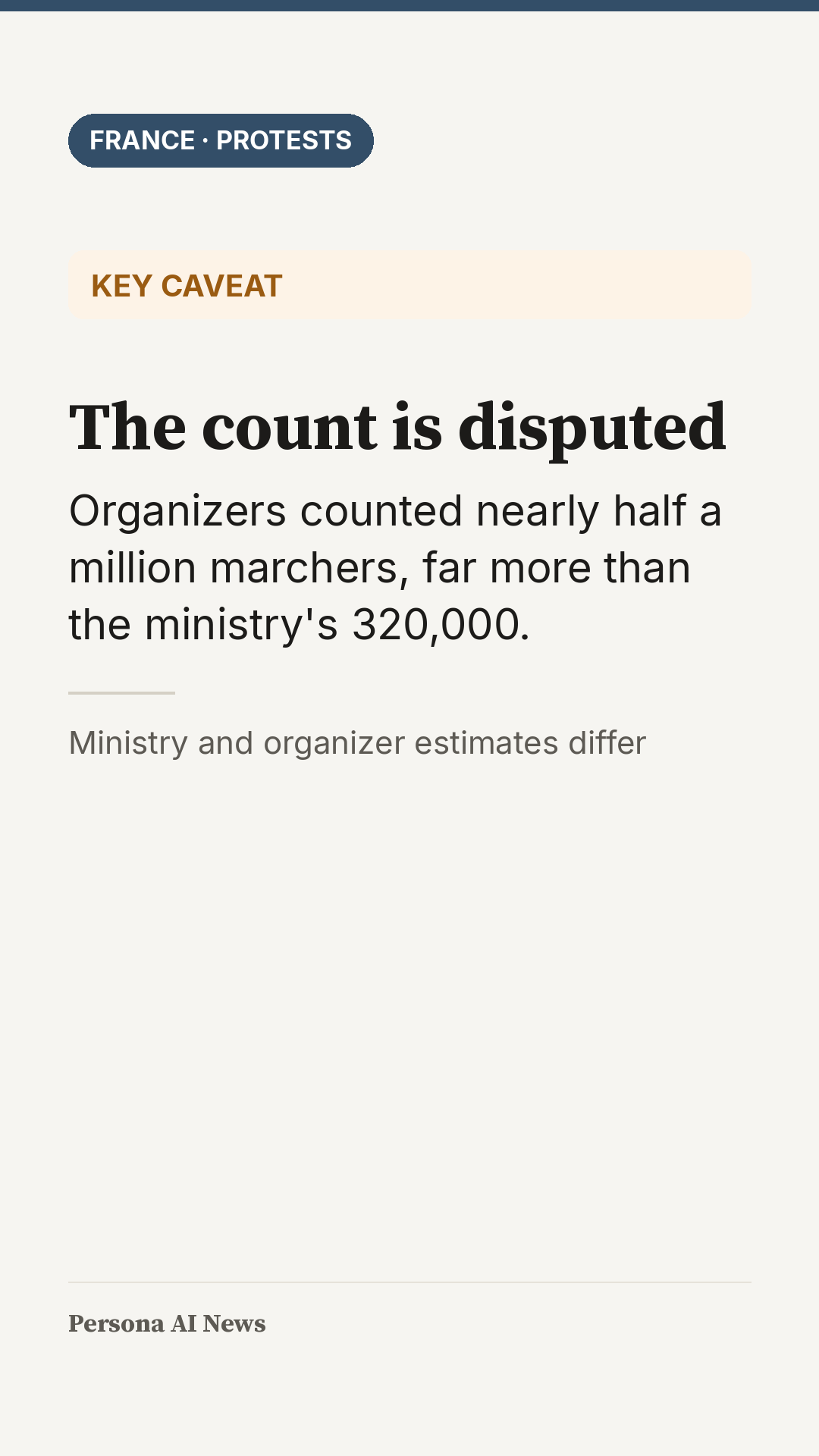
How many marched is disputed: organizers counted nearly half a million. The cost is unclear; France's Chamber of Commerce puts retailers' losses over three weeks above 1 billion euros, while other estimates double that with uninsured damage. Government promises on education and fuel costs have not calmed the protests, and public debt nearing 120 percent of output limits new spending.
Interior Minister Laurent Nuñez said police were ready for unrest on Halloween night and can ban face coverings where public order is threatened. The larger political test comes with the presidential election next April, in which polls show far-right leader Marine Le Pen ahead.
SVNGM · entry in the provenance register with fingerprint, signature and Content CredentialsThe cards of this story
from the video, click to enlarge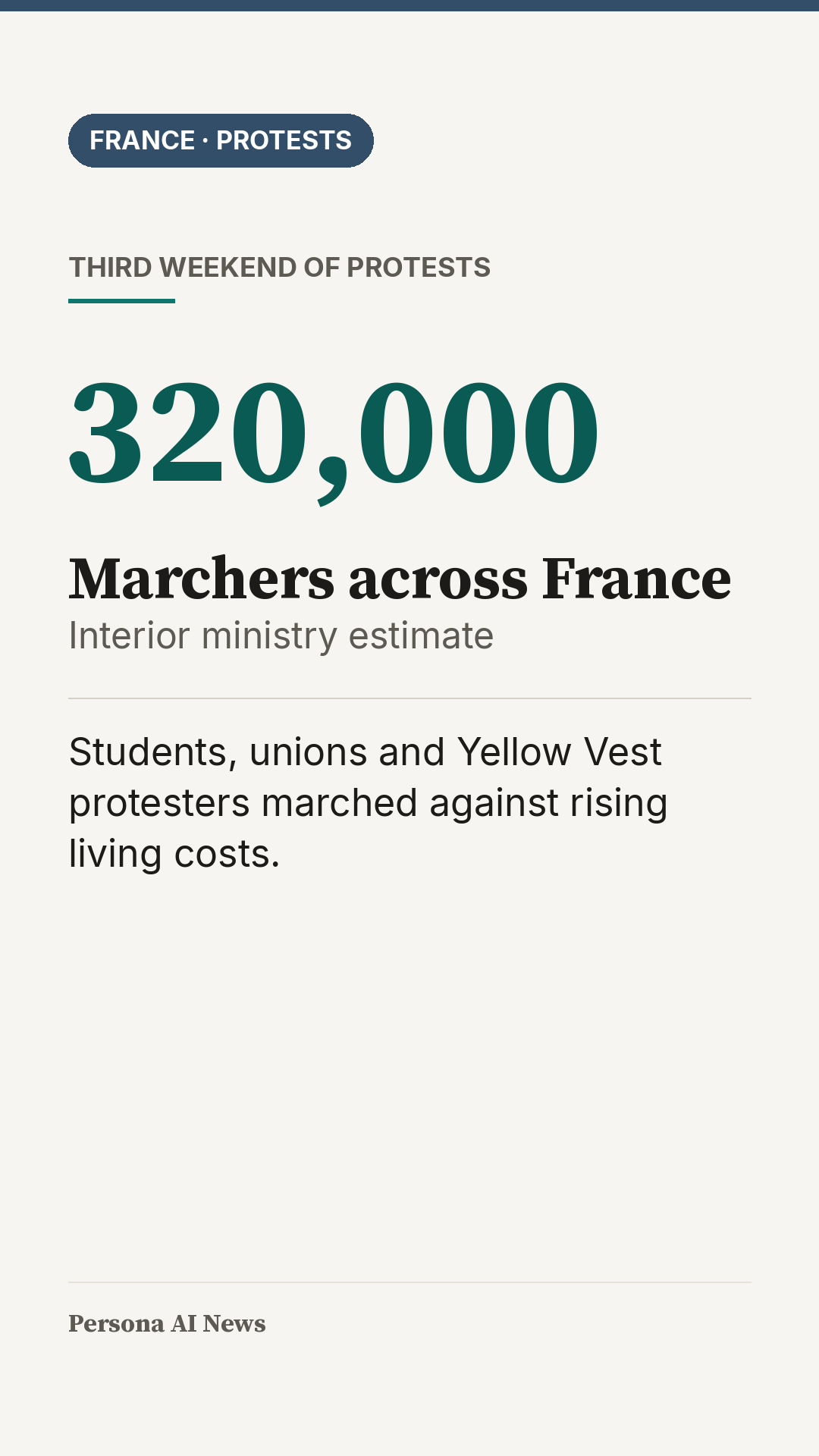
The text is well sourced and honest about disputed numbers, but it describes protests and unrest without presenting any solution or progress.
The report gives concrete figures from the interior ministry, organizers and the Chamber of Commerce. It openly says that crowd counts are disputed and that costs are unclear, and it mentions that government promises have not calmed the protests. However, it offers no solution, response that works or example of progress, so it stays a problem description. The score would rise with a look at concrete proposals, successful dialogue or models that have eased similar tensions.
AI assessment by fixed criteria. How we score →