Israel Votes in Record Numbers With No Clear Majority
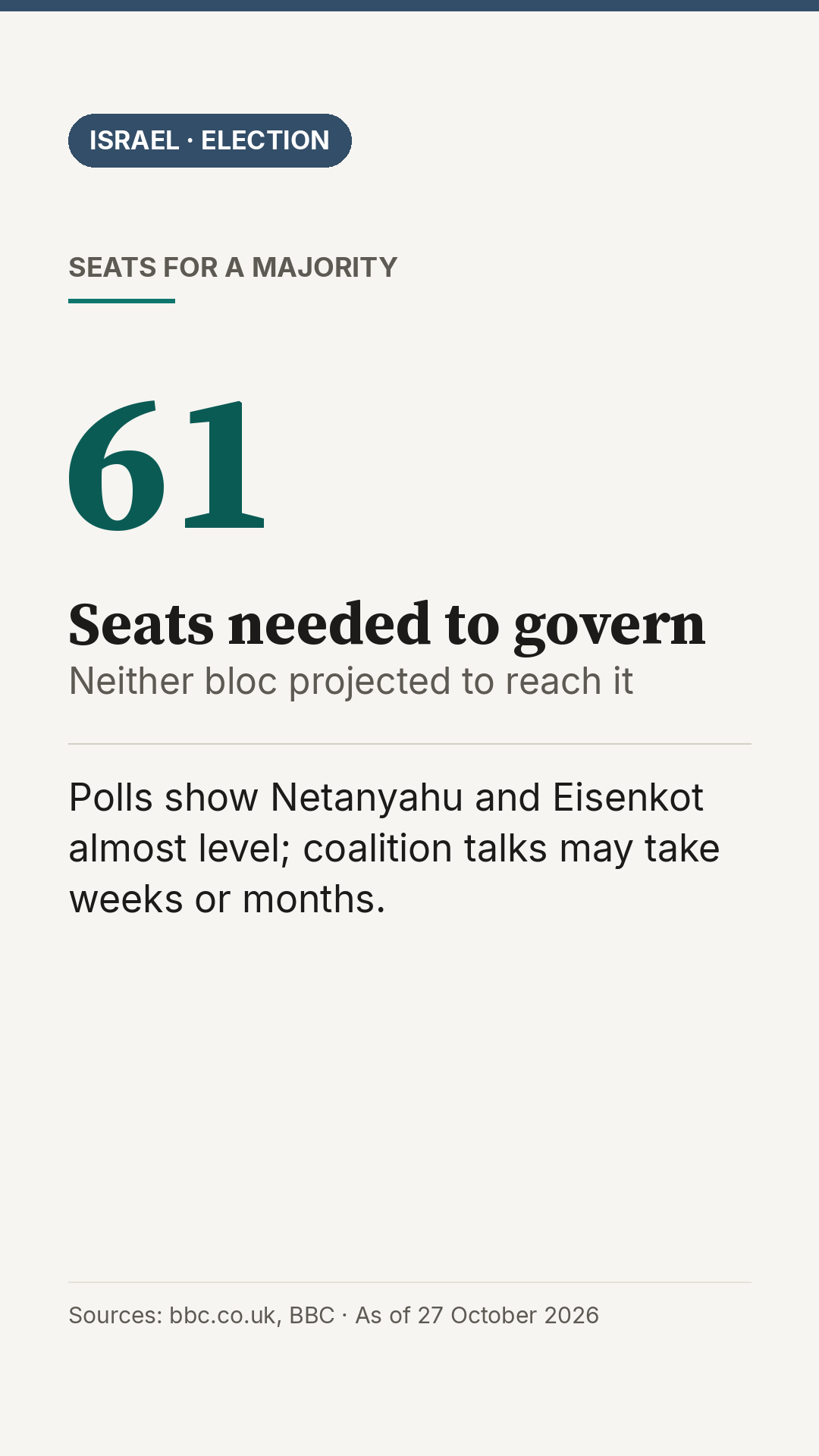
Turnout in Israel's parliamentary election was at record levels on Tuesday, 27 October, as voters chose between Prime Minister Benjamin Netanyahu and Gadi Eisenkot, a former military chief, the BBC reported. Polls published on Friday showed the candidates almost level. Neither of their political blocs is projected to win the 61 seats needed for a majority government, so weeks or months of coalition talks may follow.
Eisenkot leads Yashar, a party formed only last year, and heads the so-called change bloc, which includes former prime minister Naftali Bennett and Avigdor Lieberman. Netanyahu, who first became prime minister in 1996, needs far-right and ultra-Orthodox parties. The opposition blames him for the security failure before the Hamas-led attacks of 7 October, in which nearly 1,200 people were killed, and wants an independent inquiry, which Netanyahu resists. About 70,000 Israelis reportedly flew home from abroad to vote, more than ever before.
Exit polls can vary significantly, and many soldiers' votes will only be counted on Wednesday, possibly helping right-wing parties. About one-fifth of Israelis are Arab, yet all but one leading Jewish party rule out working with Arab parties. If no government can be formed, new elections follow, with Netanyahu as interim prime minister; Israel held five between 2019 and 2022.
Israeli broadcasters will publish exit polls at 22:00 local time, 20:00 GMT, on Tuesday evening. Netanyahu's Likud party will follow the results in Jerusalem and Eisenkot's Yashar in Tel Aviv. Once the count is complete, party leaders will start bargaining over concessions and possible coalitions.
The cards of this story
from the video, click to enlarge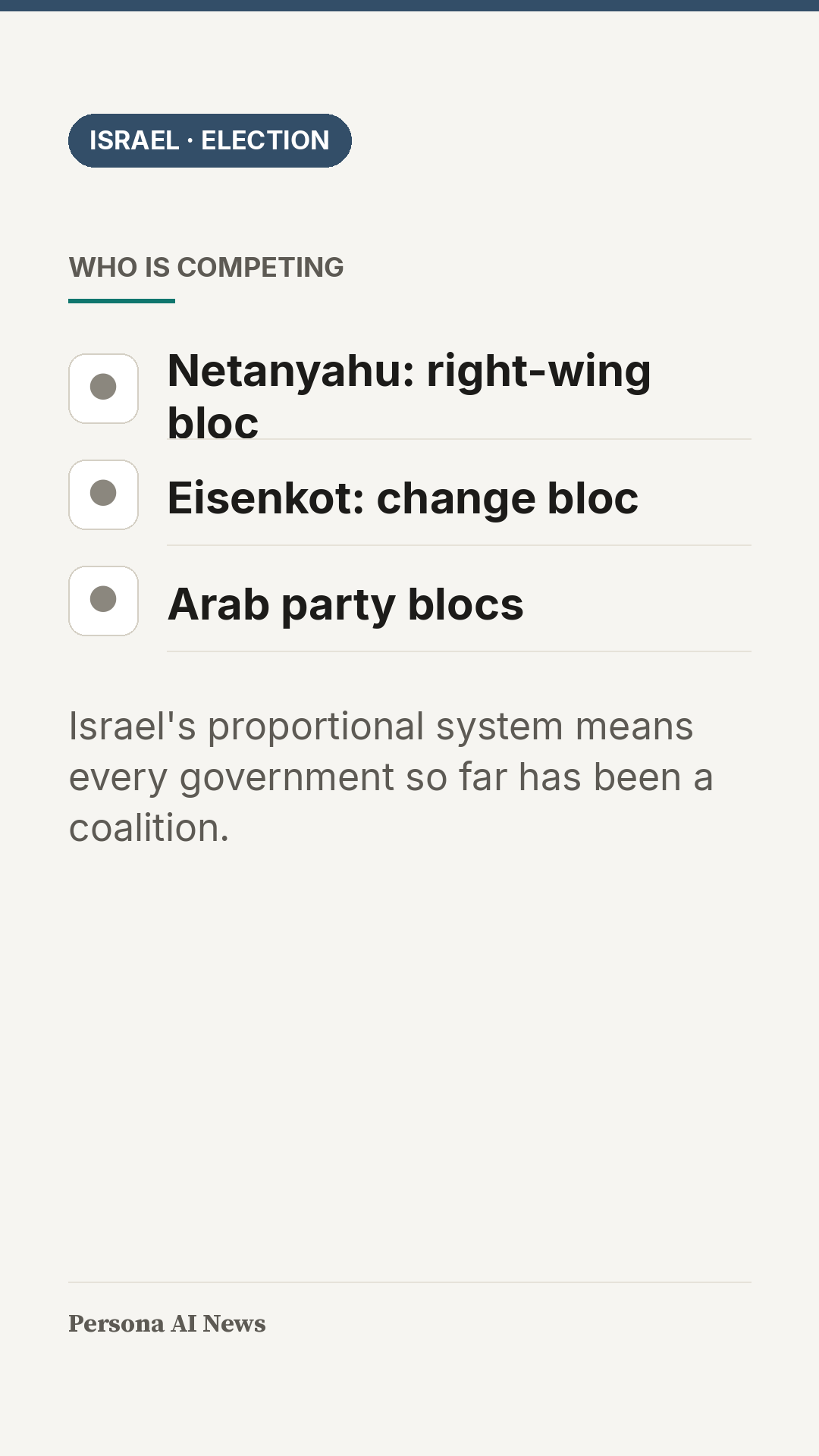
A factual, sober election report with concrete numbers and honest caveats, but it describes events and uncertainty rather than any solution or constructive progress.
The text is well sourced, with figures on turnout, seat thresholds and past elections, and it openly notes uncertainties such as exit poll errors and late soldier votes. However, it is standard event reporting and offers no response, remedy or progress beyond the high turnout. The score would rise if it explained how coalition deadlocks have been resolved before, or what proposals exist to break the cycle of repeated elections.
AI assessment by fixed criteria. How we score →