US Clears Patriot Sale to Ukraine Funded by Allies
Ukraine may buy Patriot air defense systems worth 2.1 billion dollars after the Trump administration approved the sale on Friday, 30 October, according to the State Department, the US foreign ministry. Patriot is an American system that fires interceptor missiles at incoming aircraft and missiles. Donations from Canada, Germany and Norway pay for the purchase through a US program, and the department said no American funds were involved.
The State Department said the deal covers 500 Patriot missiles. In its news release, the department said the sale would improve "the security of a partner country that is a force for political and economic stability in Europe." Ukrainian President Volodymyr Zelenskyy has said repeatedly in recent weeks that Patriot systems are essential for defending against Russian attacks. He had accused the Pentagon, the US defense ministry, of delaying the delivery of interceptor missiles that other countries had already bought for Ukraine.
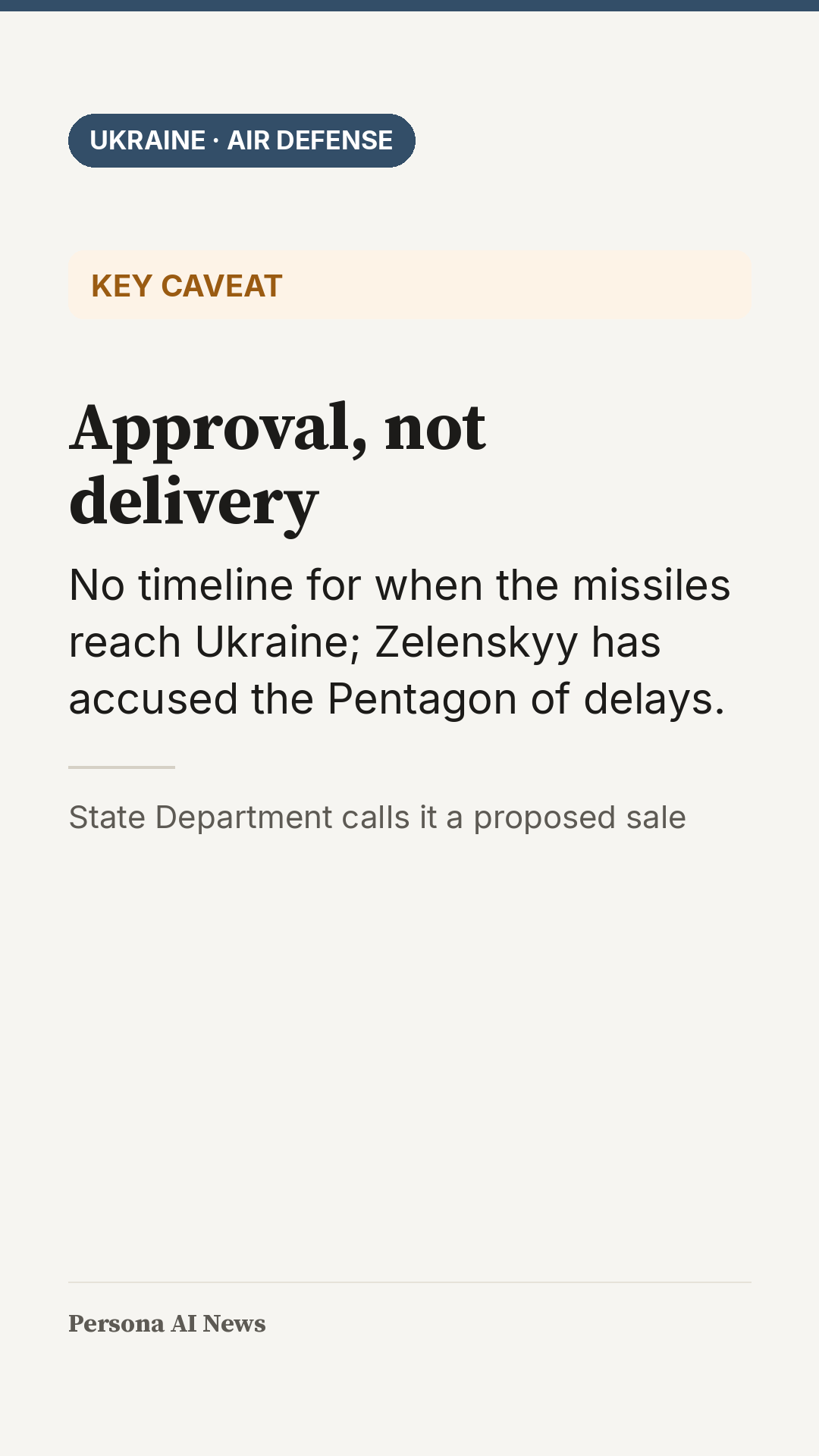
Approval is not delivery: the statement gives no timeline for when the missiles reach Ukraine, and the department calls it a "proposed sale." Two weeks ago Zelenskyy told NBC News' "Meet the Press" there was "always a big deficit with Patriot missiles." How far this order closes that gap, and how fast the Pentagon ships it, is not stated.
The statement names no date for a contract or for first deliveries, so the next visible step is the arrival of missiles in Ukraine. The sale comes as President Donald Trump has recently stepped up criticism of Zelenskyy, describing him as an obstacle to efforts to end the war with Russia.
NNHBH · entry in the provenance register with fingerprint, signature and Content CredentialsThe cards of this story
from the video, click to enlarge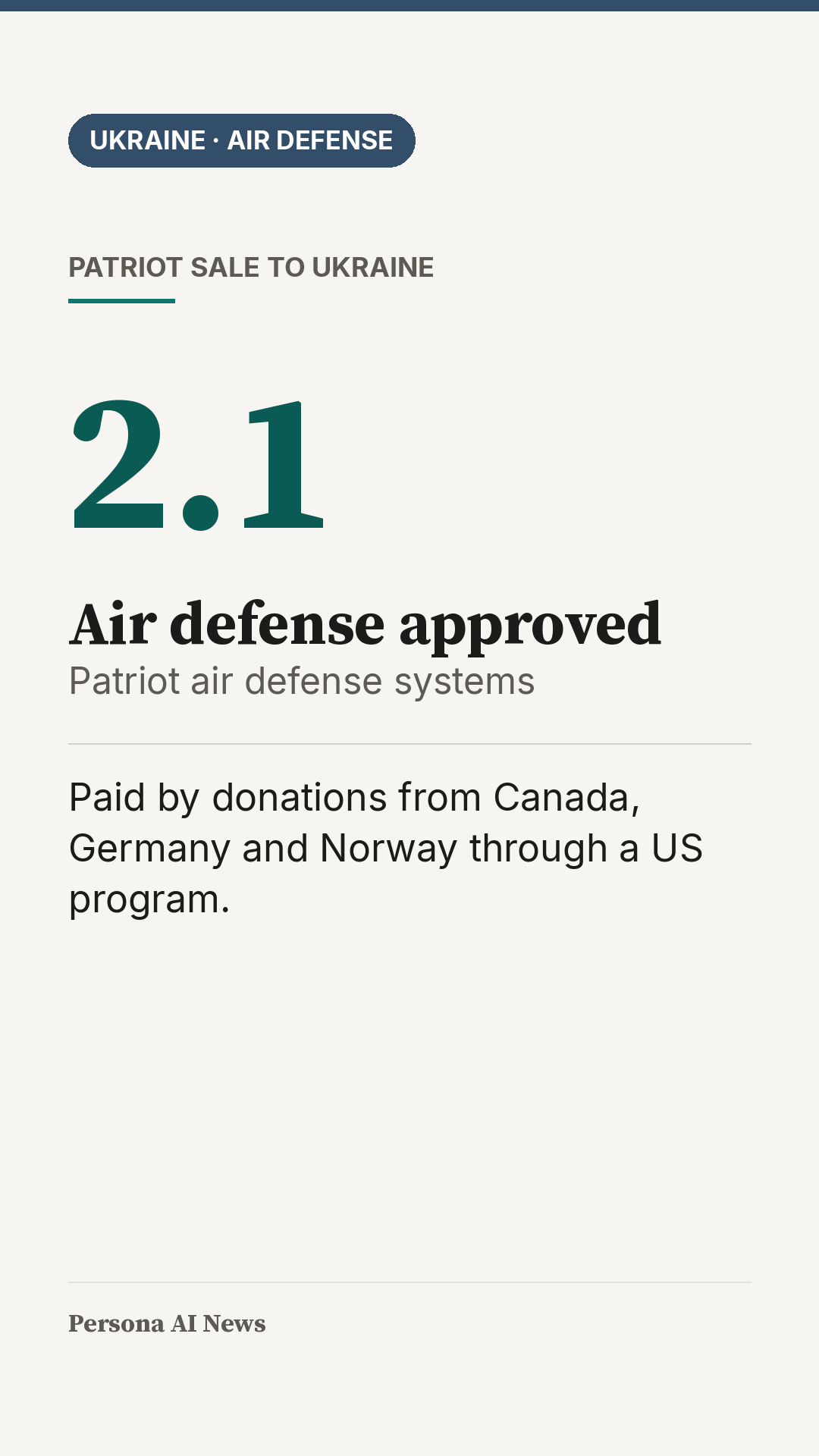
The text reports a concrete approved sale with figures and funding sources, and openly notes missing delivery timelines, though it offers little depth on impact or solutions.
The article names a concrete step: a 2.1 billion dollar Patriot sale covering 500 missiles, funded by Canada, Germany and Norway, with sources such as the State Department and Zelenskyy's remarks. It is honest about limits, stressing that approval is not delivery and that no timeline or effect on the shortage is stated. What is missing is context on how much this would actually improve Ukraine's defense and what could speed up delivery. Expert assessments or comparisons with past delivery times would raise the score.
AI assessment by fixed criteria. How we score →