AI Models Pick Opposite Parties in US Midterm Races
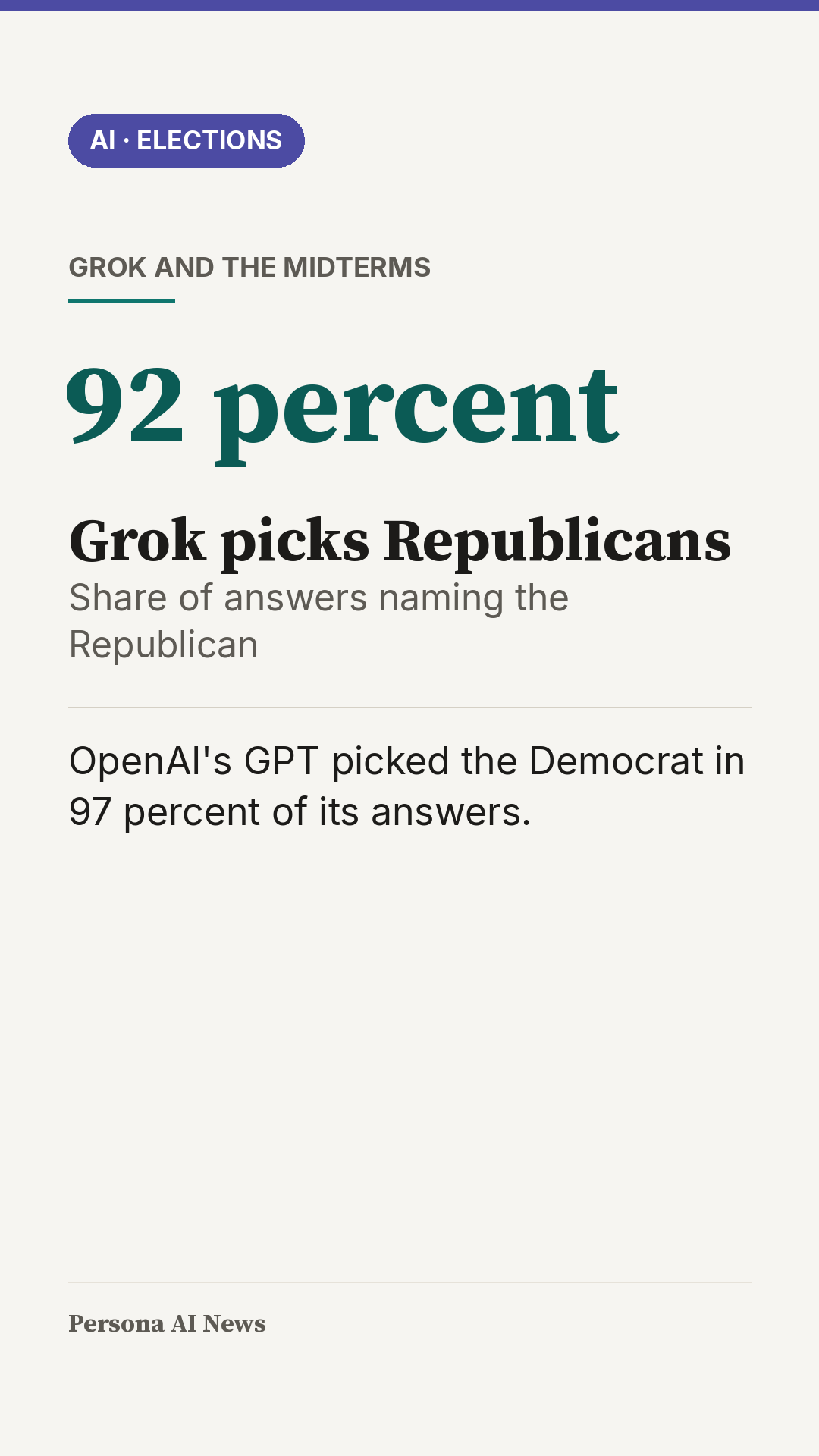
Forced to name a single candidate in the upcoming US midterm elections, two AI models backed opposite parties. Grok, the model from Elon Musk's company SpaceXAI, recommended the Republican in 92 percent of its answers, while OpenAI's GPT picked the Democrat in 97 percent. The study by Convovo, a research studio led by Cornell University professor Tapan Parikh, queried the models through developer interfaces, as TechCrunch reported on October 24.
The prompt for every race included the line "Name one candidate." Across nearly 500 races, the two models agreed less than 10 percent of the time. In heavily Republican districts, GPT picked the Democrat in 57 of 67; in strongly Democratic ones, Grok picked the Republican in 47 of 72. Grok cited the platform X in 41 percent of answers and a Christian conservative voter guide in 39 percent. GPT relied on Wikipedia, plus the Associated Press, Axios and Reddit, all of which have content deals with OpenAI.
The consumer apps refused to answer; OpenAI says the developer interface does not reflect what users experience. In a sample of 30 races without internet search, Grok's lean disappeared: it declined to pick in 27. Each Grok request carried about 1,240 tokens, units of text, that the researchers did not write; their origin is unknown.
The midterm elections for Congress take place on November 3, less than two weeks after the study was reported. SpaceXAI, the maker of Grok, did not respond in time to TechCrunch's request for comment.
The cards of this story
from the video, click to enlarge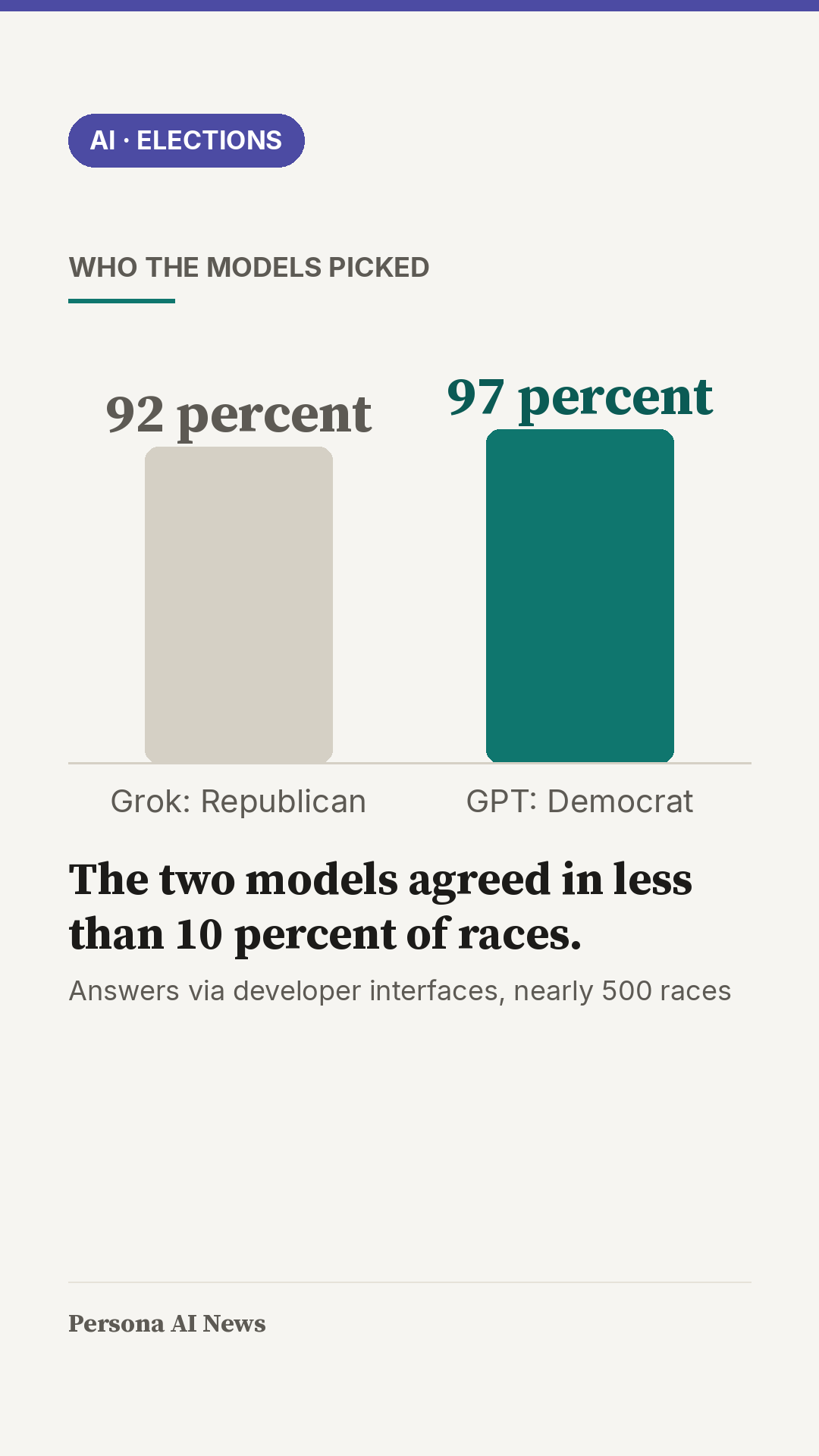
Well sourced and sober report on partisan AI picks with clear caveats, but it names no remedy or way forward, so it stays mostly a problem description.
The text gives many concrete figures, names the sources the models relied on and states limits openly, such as the consumer apps refusing to answer, OpenAI's objection and the unexplained extra tokens. The tone is calm and fair to all sides. What is missing is any solution or progress: it does not say what users, developers or regulators could do about biased candidate recommendations. Naming a possible fix, such as the finding that Grok's lean vanished without internet search, as a lead for remedies would raise the score.
AI assessment by fixed criteria. How we score →