Police Fire Tear Gas as Protests Sweep France
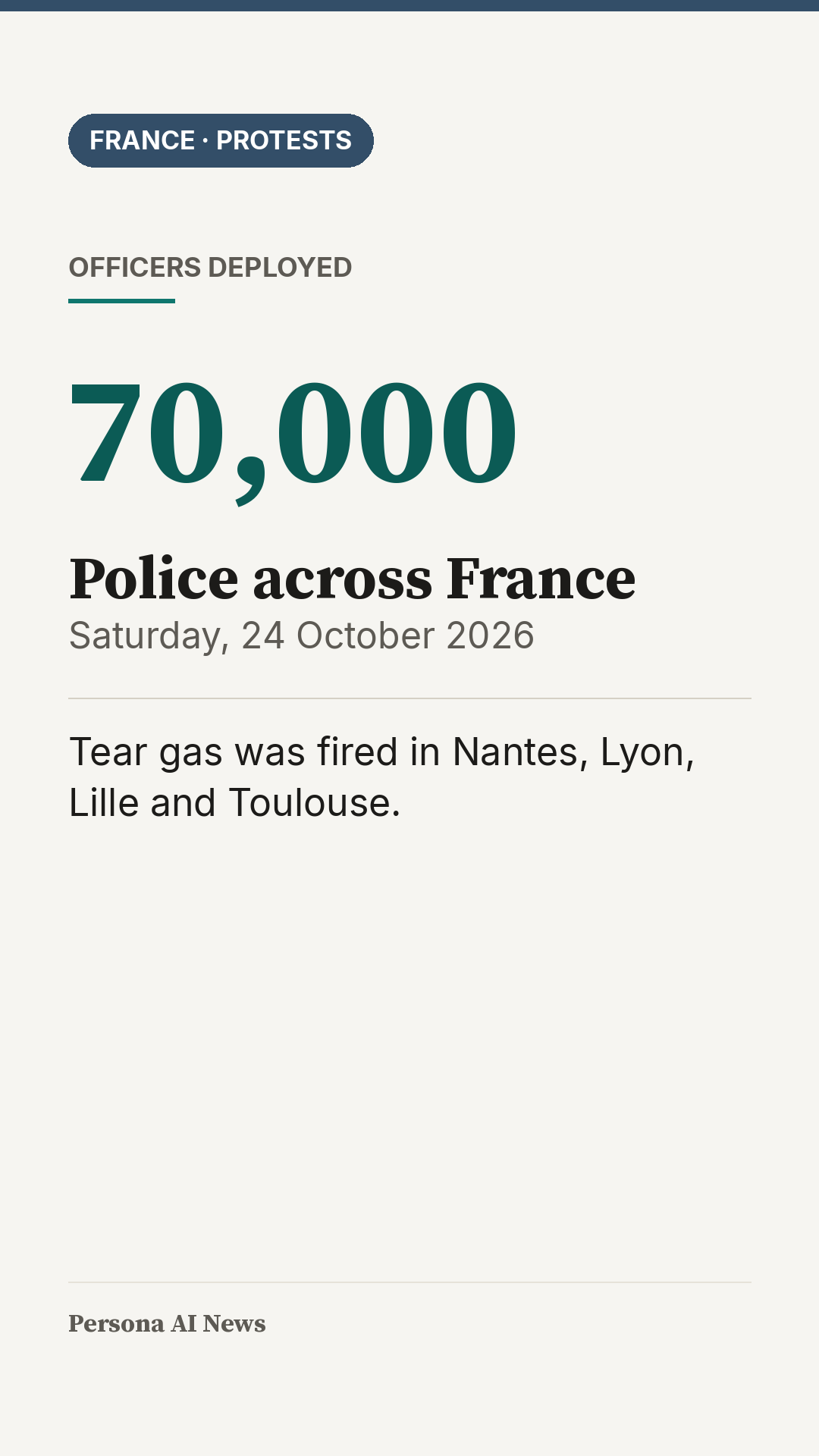
Police used a water cannon to block a bridge over the Loire river in Nantes, a city in western France, on Saturday, 24 October 2026, as protesters tried to enter a banned zone. Riot police fired tear gas in Lyon, Lille and Toulouse too, with some 70,000 officers deployed nationwide. Yellow Vests, a largely rural protest movement, marched with trade unions and students against rising living costs and fuel prices.
Interior Minister Laurent Nuñez said police had arrested 135 people nationwide and seized weapons ranging from slingshots to a katana, a Japanese sword. Paris police counted at least 110,000 marchers, on a route police shifted at the last minute to the city's edge. In Orléans, south of Paris, the prefecture, the local state authority, counted 11,000 protesters by noon against a congress of the far-right National Rally. Student protests over teacher shortages and school conditions, which grew into this movement, began more than a month ago.
The arrest figure is interim, and the live report gives no nationwide count of marchers. Six months before a presidential election, President Macron met student union representatives, who called for more protests; no government concession is reported. Andrew Smith, a historian at Queen Mary University of London, told the French broadcaster: "You can't police yourself into social cohesion."
The Yellow Vest movement has called new demonstrations for 31 October, including a sit-in outside parliament and city halls nationwide. On Sunday, Marine Le Pen, the far-right candidate for the 2027 presidential election, is due to address the National Rally congress in Orléans after Jordan Bardella, its re-elected president.
The cards of this story
from the video, click to enlarge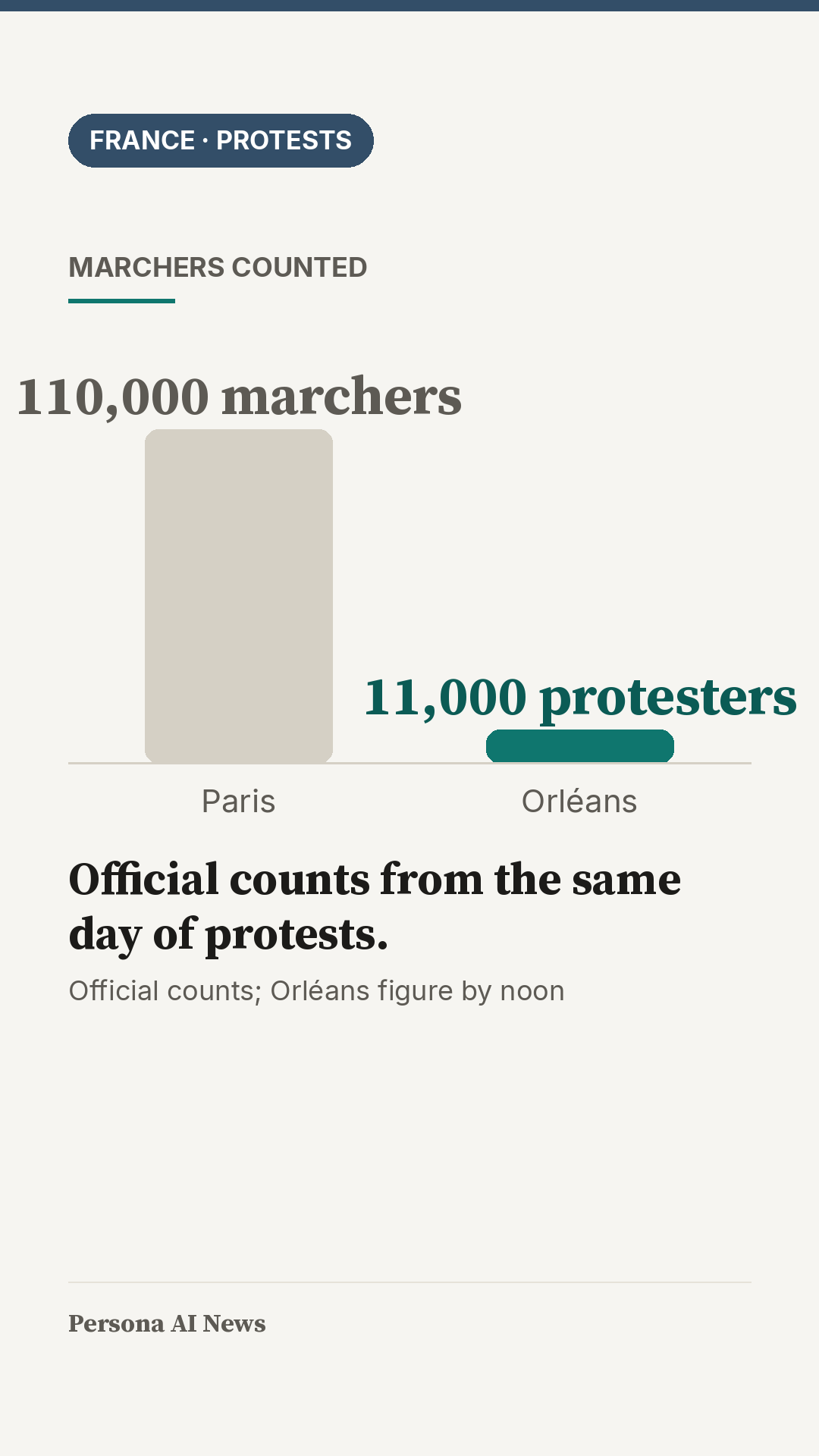
Well sourced and candid about gaps, but it only reports protests and policing, with no solution or progress; the historian's quote hints at a critique without any way forward.
The text gives concrete figures (135 arrests, 110,000 marchers in Paris, 70,000 officers) and names its sources. It also admits that the arrest count is interim and that no nationwide marcher count exists. However, it describes conflict and does not point to any response, concession or fix for the underlying issues of living costs and school conditions. The score would rise with reporting on proposed policies, dialogue between government and protesters, or examples of what has eased similar tensions.
AI assessment by fixed criteria. How we score →