Judge Dismisses Bid to Block Alaska Senate Certification
Two of the four candidates for Alaska's seat in the US Senate have similar names: Republican Senator Dan Sullivan and Daniel Sullivan Jr., who belongs to no party. The Trump administration sued to block official certification of the result if Sullivan loses, so that possible voter confusion could be investigated. On 1 November, federal District Judge Sharon Gleason dismissed the suit, ruling the government lacked the ability to bring it.
The lawsuit relied on the preamble of the National Voter Registration Act, a federal law on how citizens register to vote. Gleason, a nominee of President Barack Obama, found the requested order would likely violate Alaskans' right to a secret ballot. The government, she wrote, gave no explanation of how it could redress its alleged injury "while simultaneously maintaining the secrecy of the ballot". Voting rights groups helped defend the state; Sophia Lin Lakin of the American Civil Liberties Union called the suit "a reckless waste of taxpayer money".
The Justice Department plans to appeal. Governor Mike Dunleavy, a Republican, has ordered a state investigation that he says could stop certification; it followed a New York Times report, not confirmed by NPR, on Democratic operatives recruiting Sullivan Jr. Democrat Mary Peltola denies involvement. Federal prosecutors cite an ongoing criminal probe. Meanwhile, over 86,700 Alaskans have already voted early.
Voting ends on Tuesday, Election Day. No date for the Justice Department's appeal has been named. Whether the state certifies the result depends partly on Dunleavy's investigation; Senator Sullivan told CNN he would accept the outcome, win or lose.
J9VGD · entry in the provenance register with fingerprint, signature and Content CredentialsThe cards of this story
from the video, click to enlarge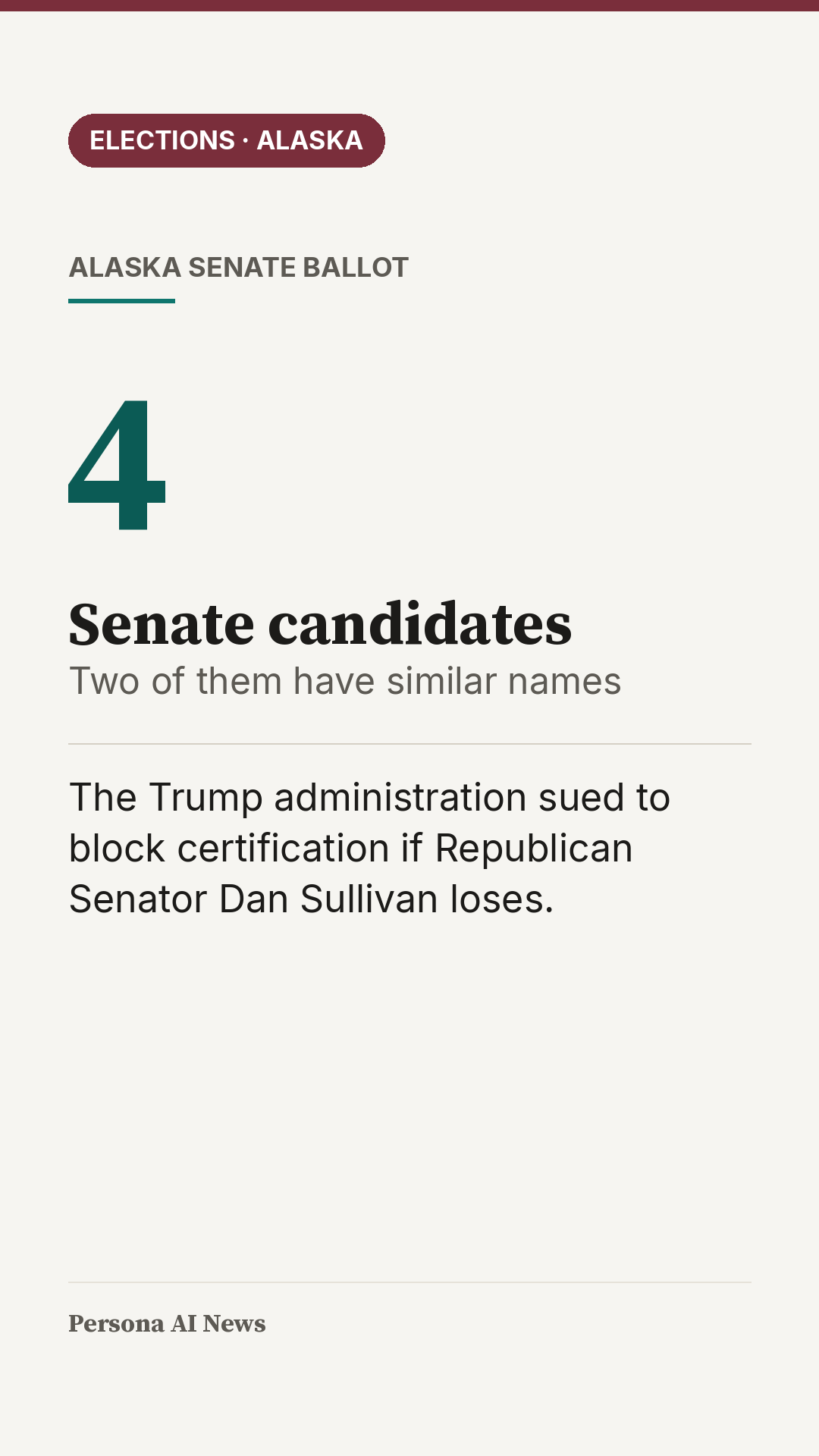
Factual, well-sourced court report with open questions noted, but it describes a dispute and its legal outcome rather than any solution or constructive progress.
The text is sober and precise. It names the judge, the legal basis, the ruling, the vote count and who disputes what, and it flags that a key claim is unconfirmed by NPR and that the appeal date is unknown. What it lacks is a solution angle: it does not explain how ballot name confusion is handled elsewhere or what safeguards exist. Adding such context, or examples of how election officials prevent voter confusion, would raise the score.
AI assessment by fixed criteria. How we score →