Macron Moves to Ban 'Illegitimate' Protests After Riots
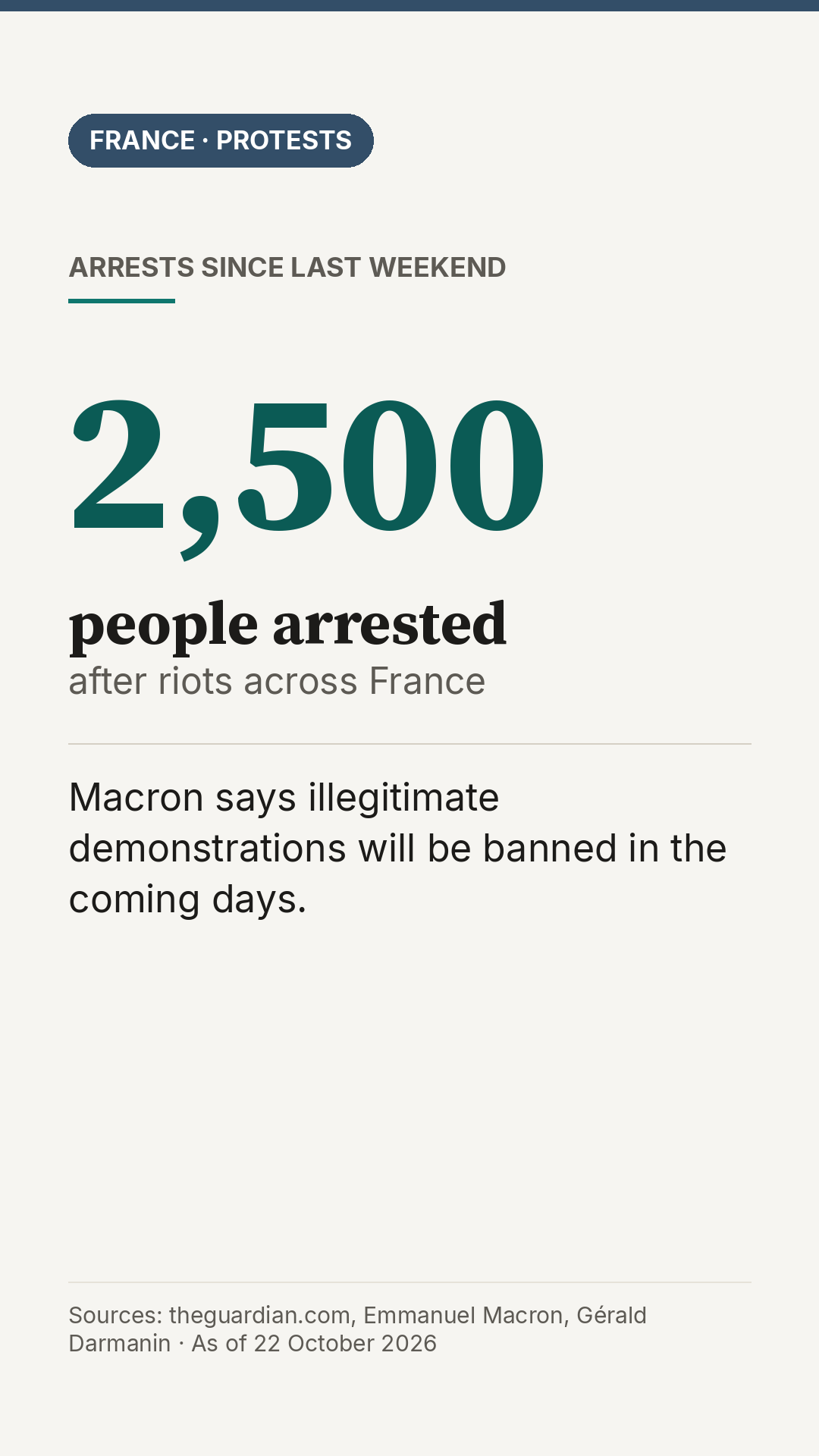
Protests that began last month at a high school in Créteil, near Paris, have grown into nationwide unrest over the cost of living. On Thursday, French President Emmanuel Macron said "illegitimate" demonstrations would be banned in the coming days. Marches by recognised groups such as trade unions may go ahead, though their routes could be changed. Authorities have arrested 2,500 people since rioting broke out last weekend.
Authorities have banned all protests in central Lyon, France's third-biggest city, on Saturday; between 200 and 300 shops there were looted last weekend and the tourist office was set on fire. Marseille, Nice and Toulon announced similar bans. In Paris, a march from the Place de la Bastille was authorised but barred from the city centre, and partial night-time curfews apply in parts of several cities. Justice Minister Gérald Darmanin said 174 of those arrested had been remanded in custody and more than 900 were being prosecuted.
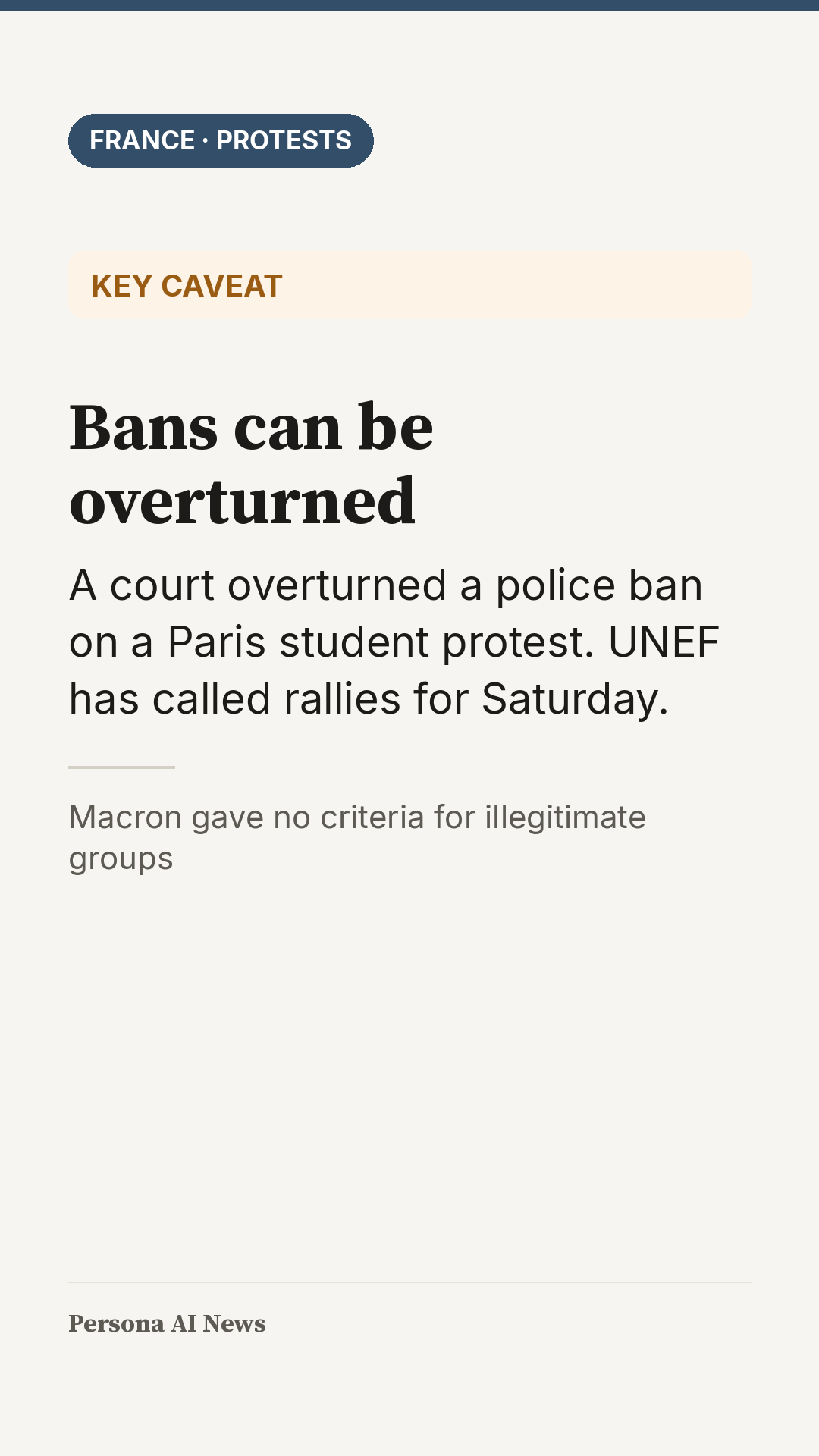
The bans can be challenged: a court overturned an initial police ban on a student protest planned in Paris for Thursday. Macron gave no criteria for which groups lack "legitimate authority". So far, about 7 percent of those arrested have been remanded in custody, and UNEF, France's main student union, has called rallies for Saturday.
Macron will chair a defence council, a meeting of key ministers, on Friday to decide the next steps before new nationwide demonstrations called for Saturday. Prime Minister Sébastien Lecornu was seeking cooperation from the main political parties on Thursday. The next presidential election is six months away.
The cards of this story
from the video, click to enlarge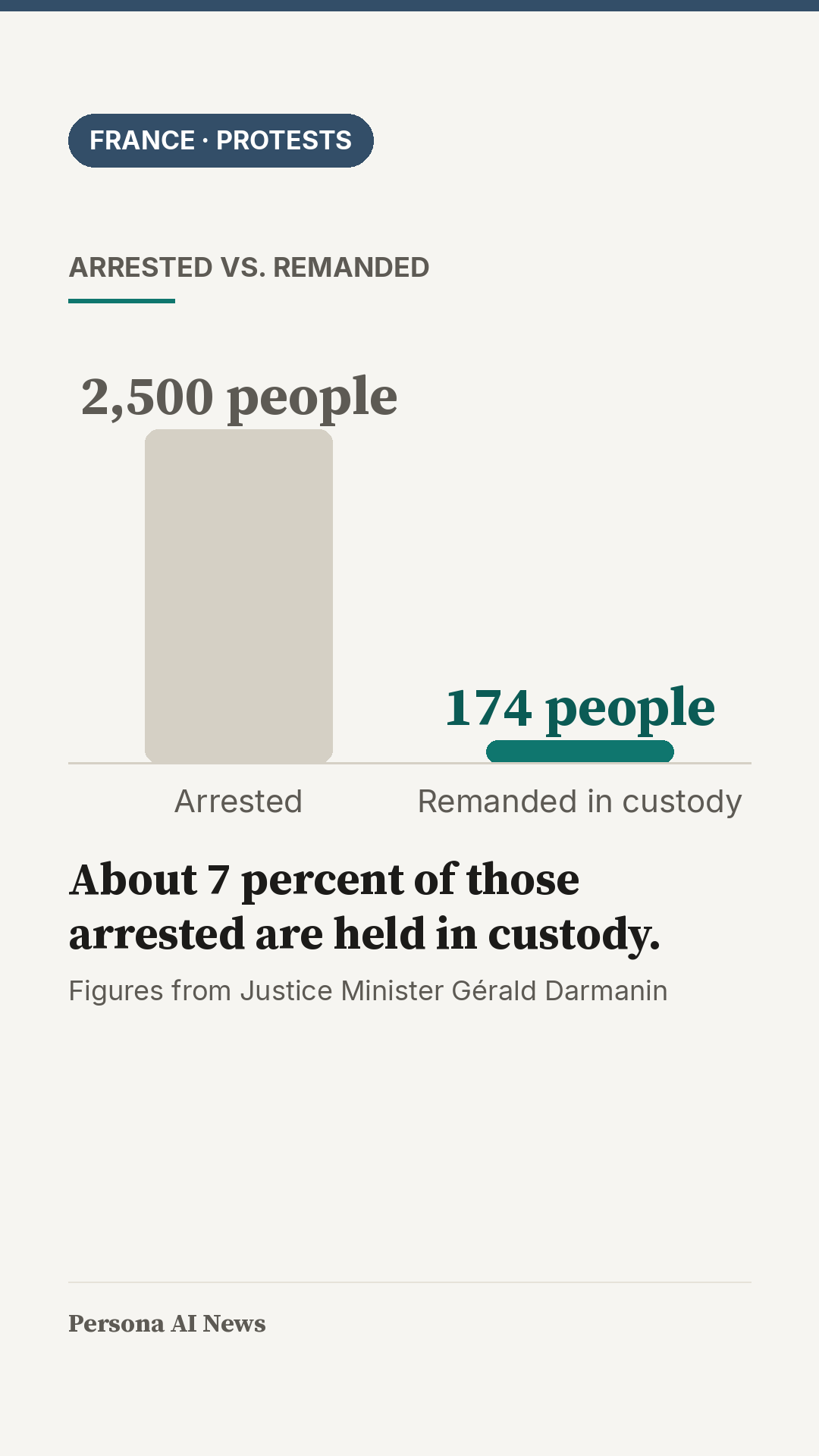
A fact-rich, sober report on unrest and bans that notes legal challenges and unclear criteria, but offers no real solution or progress beyond restrictive measures.
The text gives many concrete figures, such as 2,500 arrests, 174 remand cases and 200 to 300 looted shops. It also notes limits: a court overturned one ban, and Macron gave no criteria for "legitimate" groups. However, it mainly describes a conflict and security measures, and says little about the underlying cost-of-living problem or any attempt to address it. The score would rise with information on proposed economic responses, dialogue with protesters, or examples of de-escalation.
AI assessment by fixed criteria. How we score →