Justice Department charges James Comey for the third time
Prosecutors at the US Justice Department charged James Comey, the former director of the FBI, America's federal police agency, on Monday, 26 October, with two counts of leaking information related to national defense. It is the third time the Trump administration has brought criminal charges against Comey, who became an outspoken critic of the president after Trump fired him. The charges were filed in federal court in Washington, DC.
The filing lists two counts but gives few details about what Comey allegedly leaked. The government says he passed the information to a national news outlet in 2016, conspiring with an unnamed person. His lawyer, Patrick Fitzgerald, says the case concerns a New York Times article from 5 October 2016 that prosecutors had already investigated. Prosecutors used an "information", a charging document not approved by a grand jury; according to the Guardian, this appears aimed at filing before the 10-year statute of limitations, the legal deadline for charges, runs out.
The charges are not yet an indictment: a grand jury still has to approve them. Comey's lawyers want the case dismissed, arguing that the deadline has passed, that the matter was investigated twice without charges, and that the law demands an indictment within that time. A separate charge of lying to Congress was thrown out last year.
Next, a federal judge in Washington must rule on the defense motion to dismiss, which was unsealed on Monday. Before any trial, prosecutors must also secure a grand jury's approval. The Guardian's report gives no date for either decision.
The cards of this story
from the video, click to enlarge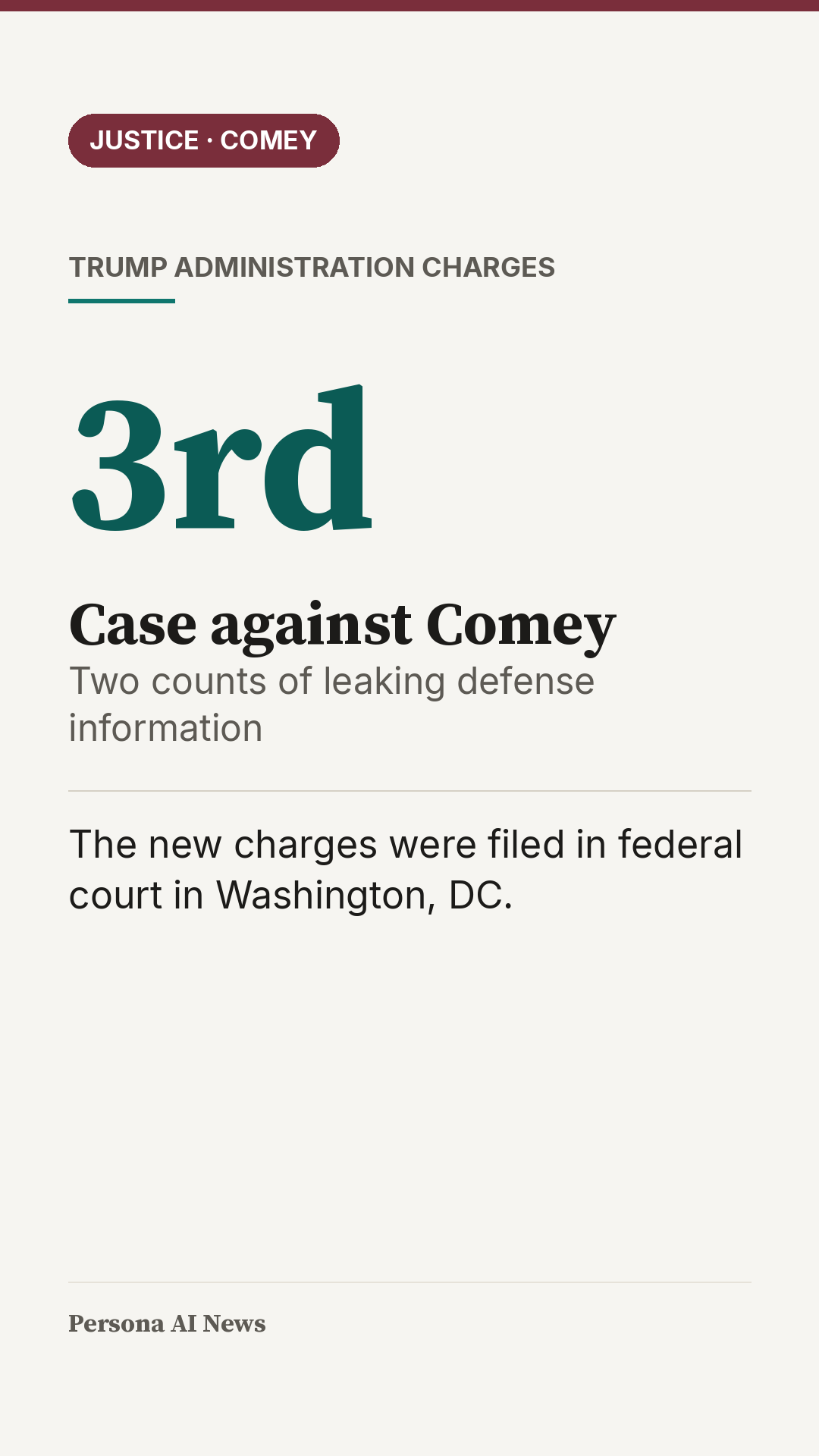
A sober, well-sourced and candid report on legal proceedings, but it describes a conflict and offers no solution, so it is only partly constructive.
The text is calm and precise. It names dates, the charging document, the legal deadline and the sources, and it openly says what is unclear, such as how little the filing reveals and that no dates are set for the next decisions. It does not present a solution or progress, because it simply reports an ongoing legal dispute. The score would rise with context on how such cases are normally resolved, on the safeguards of the justice system, or on what the case means for the rule of law.
AI assessment by fixed criteria. How we score →