High-Speed Train Crash in Spain Kills at Least 64
In January, a collision between high-speed trains on the line from Madrid to Seville killed 46 people. Early on Wednesday, 28 October, a train of Spain's state railway Renfe hit the rear of a stationary train of the private operator Iryo on the same line, near Urda, south of Madrid. At least 64 people died, said the government of Castilla-La Mancha, the region where the crash happened.
Spain's transport minister, Oscar Puente, said the LZB signaling system, which controls train movements on the line, failed at around 8:30am. Control passed to the Atocha control post in Madrid, which let the Renfe train resume its journey "normally" although the system had not been restored. Puente called this "inexplicable". The Renfe train carried 397 passengers and the Iryo train 147, said regional spokeswoman Esther Padilla. More than 200 members of Spain's Military Emergencies Unit are working at the site.
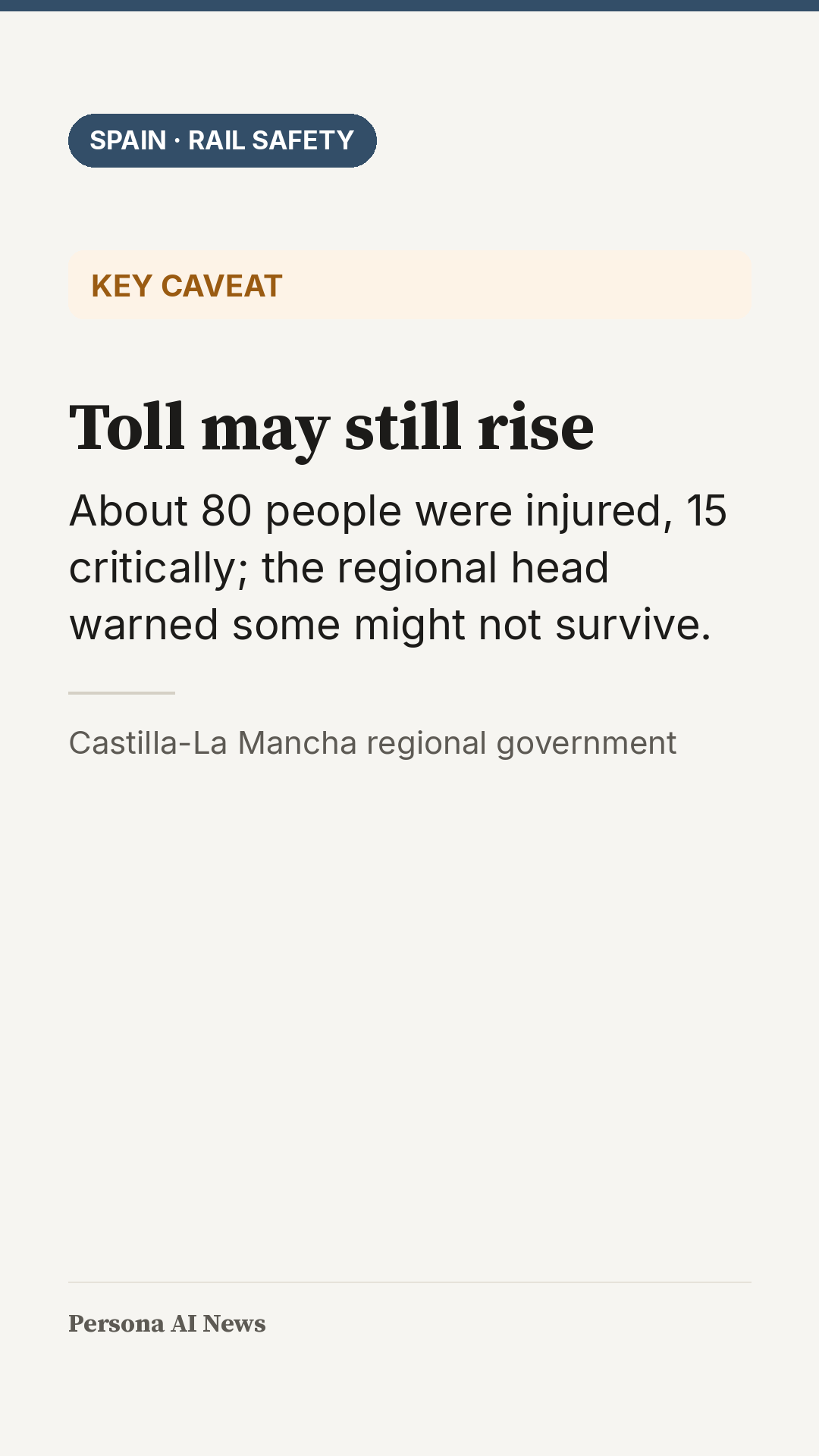
The toll is provisional: about 80 people were injured, 15 of them critically, and regional head Garcia-Page warned some might not survive. Puente said the number of trains hit by the outage, six, is uncertain. After the January crash, the government promised checks on all lines, journalist Graham Keeley told Al Jazeera; whether this section was checked is not known.
A disaster investigation team of the Civil Guard, Spain's national police force with military status, has been sent to the site. ADIF, Spain's rail infrastructure operator, has suspended high-speed services between Madrid and the southern region of Andalusia. Spain holds an election in just over a month, Keeley noted.
The cards of this story
from the video, click to enlarge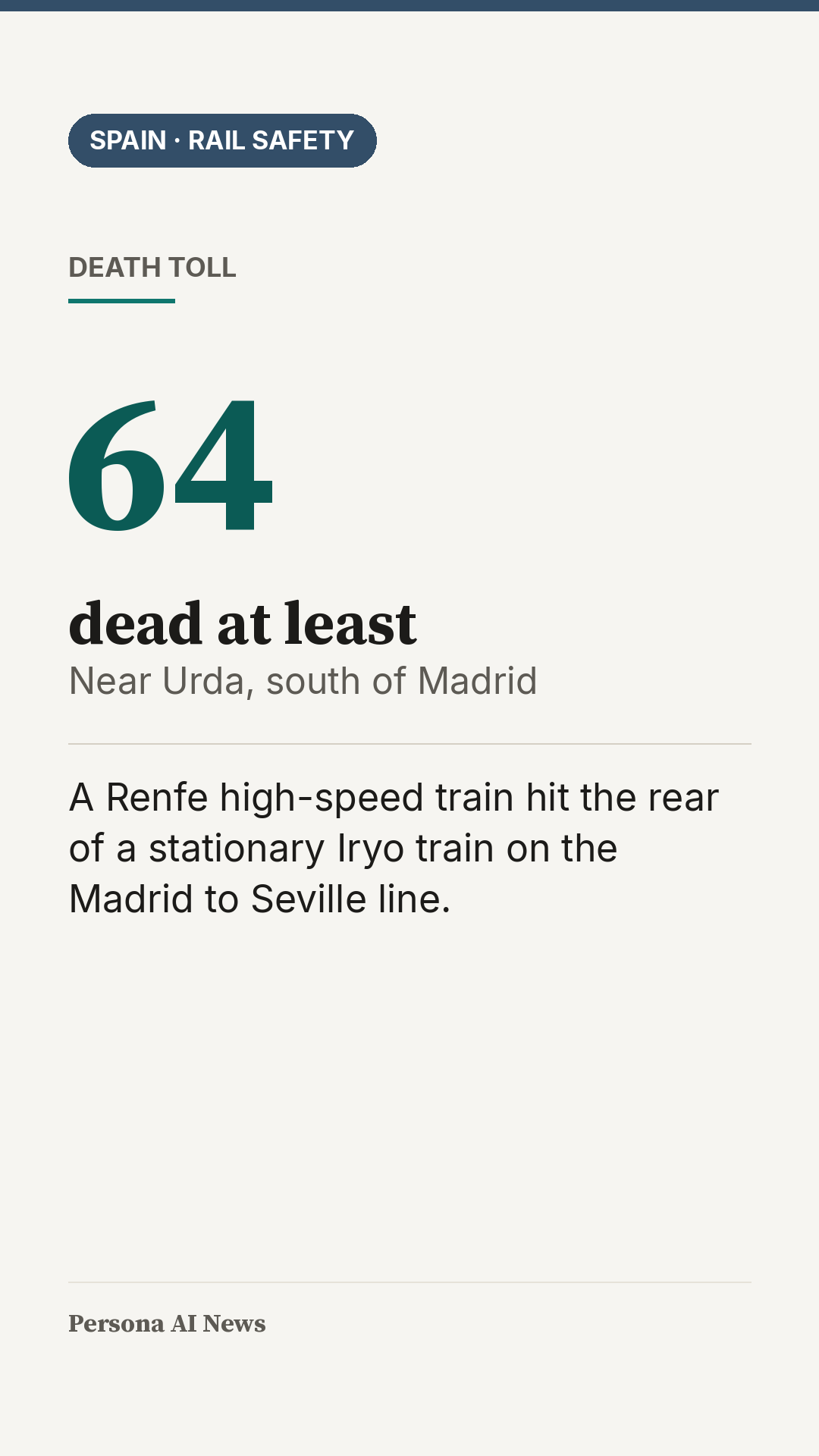
Fact-rich, sober crash report that openly flags uncertainties, but it offers almost no solutions or progress beyond emergency response and a service suspension.
The text gives concrete figures, names its sources and says clearly what is still unknown, such as the final death toll, how many trains were affected and whether the line was checked after January. That makes it reliable and calm in tone. It is mainly a description of a disaster, though, and mentions only rescue work, an investigation and a suspended service as responses. The score would rise with information on safety measures, lessons from the January crash or concrete steps to prevent a repeat.
AI assessment by fixed criteria. How we score →