Earthquake in Remote Northern Tibet Kills at Least 16
People in northern Tibet left their homes and sheltered outside or in parked cars, state media videos showed, after an earthquake struck late at night on Thursday. The quake killed at least 16 people in the Tibet Autonomous Region of southwestern China, Al Jazeera reported on 22 October. It was the strongest earthquake to hit China since January 2024. Rescue efforts were continuing. Electricity and communication lines were down.
According to the United States Geological Survey, the magnitude 7 quake was centered in a mountainous area about 118 miles east-northeast of Nagqu, a sparsely populated high-altitude city, and 242 miles northeast of Lhasa, Tibet's capital. Officials reported the collapse of at least 339 homes and 20 livestock sheds. The state news agency Xinhua said a level-II earthquake disaster emergency response had been activated. Beijing deployed 1,600 rescue personnel, Al Jazeera correspondent Katrina Yu reported.
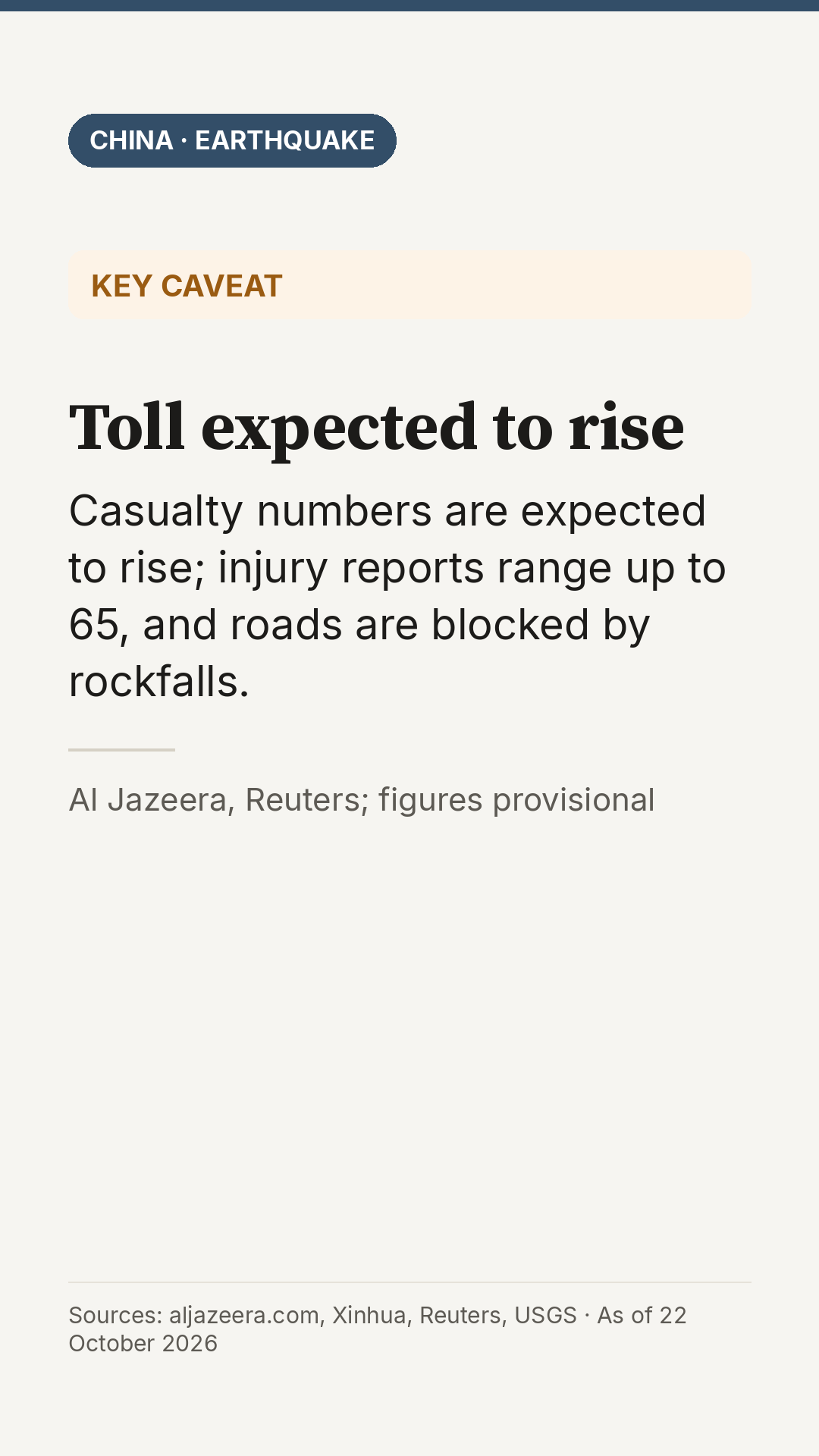
The death toll is provisional: Yu said casualty numbers were expected to rise in the coming hours. Officials in Nagqu put the number of injured at up to 65, according to Reuters, while other reports gave a slightly lower figure. Rescuers face blocked roads and rockfalls at an altitude of about 4,800 meters.
Casualty figures are expected to rise in the coming hours as rescue teams try to reach the area on roads blocked or affected by rockfalls. Snow is forecast over the next few days, Yu said, which adds to the difficulty of access.
The cards of this story
from the video, click to enlarge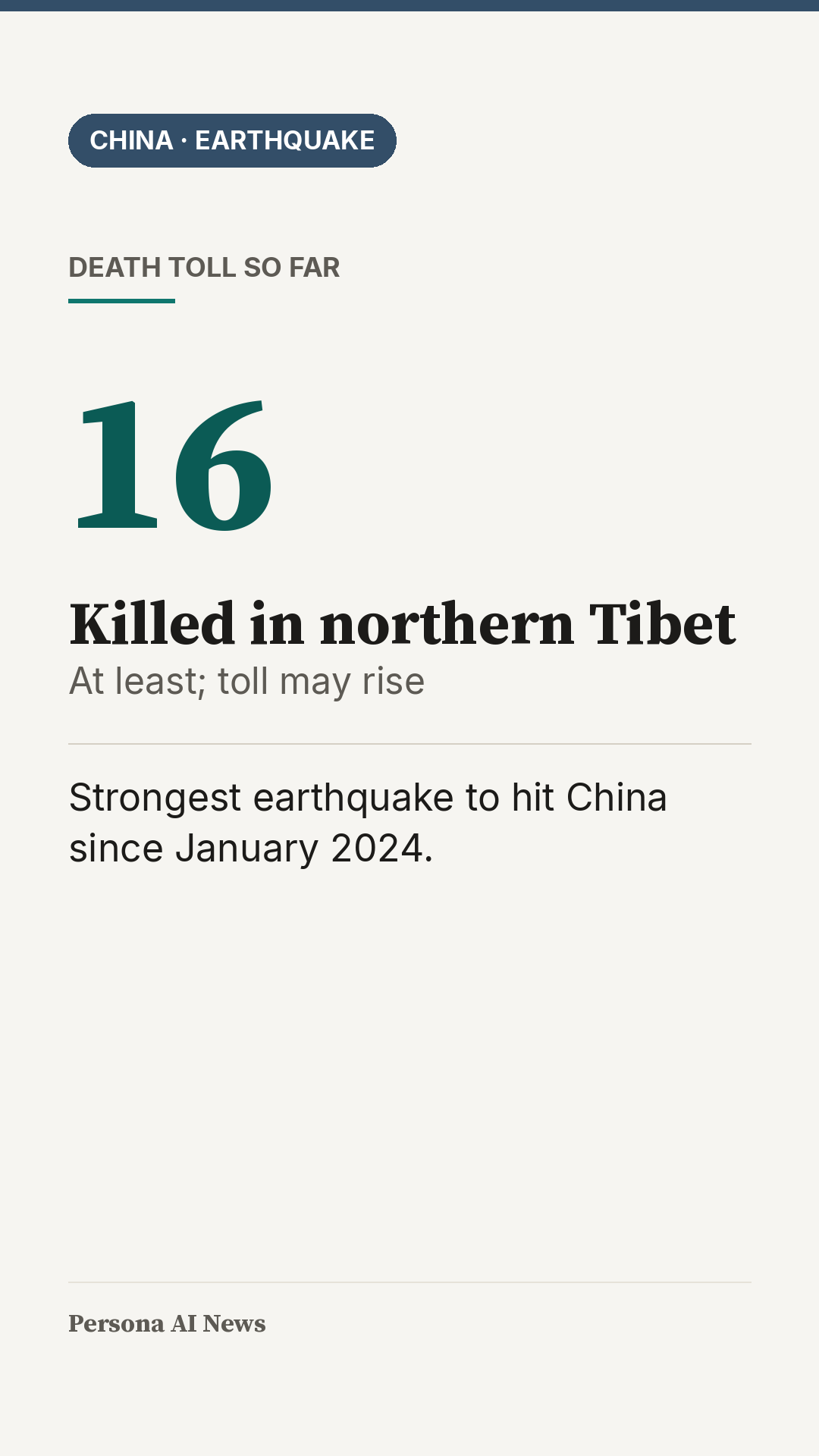
A factual, sober breaking-news report with solid figures and honest caveats, but it offers only the rescue response as a response and no analysis of lessons or preparedness.
The text gives concrete numbers (magnitude 7, at least 16 dead, 339 collapsed homes, 1,600 rescuers) and names its sources, such as Al Jazeera, Xinhua, Reuters and the USGS. It is also honest about uncertainty: the death toll is provisional and blocked roads and forecast snow could hamper access. What it lacks is a forward-looking angle. It mentions the emergency response but says nothing about earthquake preparedness, building standards or how affected people will be helped over time. Adding such context, for example what has worked in earlier quakes in the region, would raise the score.
AI assessment by fixed criteria. How we score →