Kenya Records Second Ebola Death in First Outbreak
A woman who was a close family member of Kenya's first Ebola victim has died in quarantine, the health ministry said, as the BBC reported on 24 October. She is the second Ebola death in Kenya, which is facing its first ever outbreak. Seven other patients are being treated in isolation. The first victim had travelled from the Democratic Republic of Congo, in central Africa.
The woman, aged 65, developed symptoms on 13 October while already in quarantine. The first victim, a man who fell ill in September, was treated in several hospitals in DR Congo before dying in Nairobi, Kenya's capital, on 5 October. The patients now in two isolation facilities are three of his relatives, three health workers and a hospital cleaner. Kenya screens travellers from DR Congo and nine other high-risk countries; they must fill in a digital form before boarding and show a QR code on arrival.
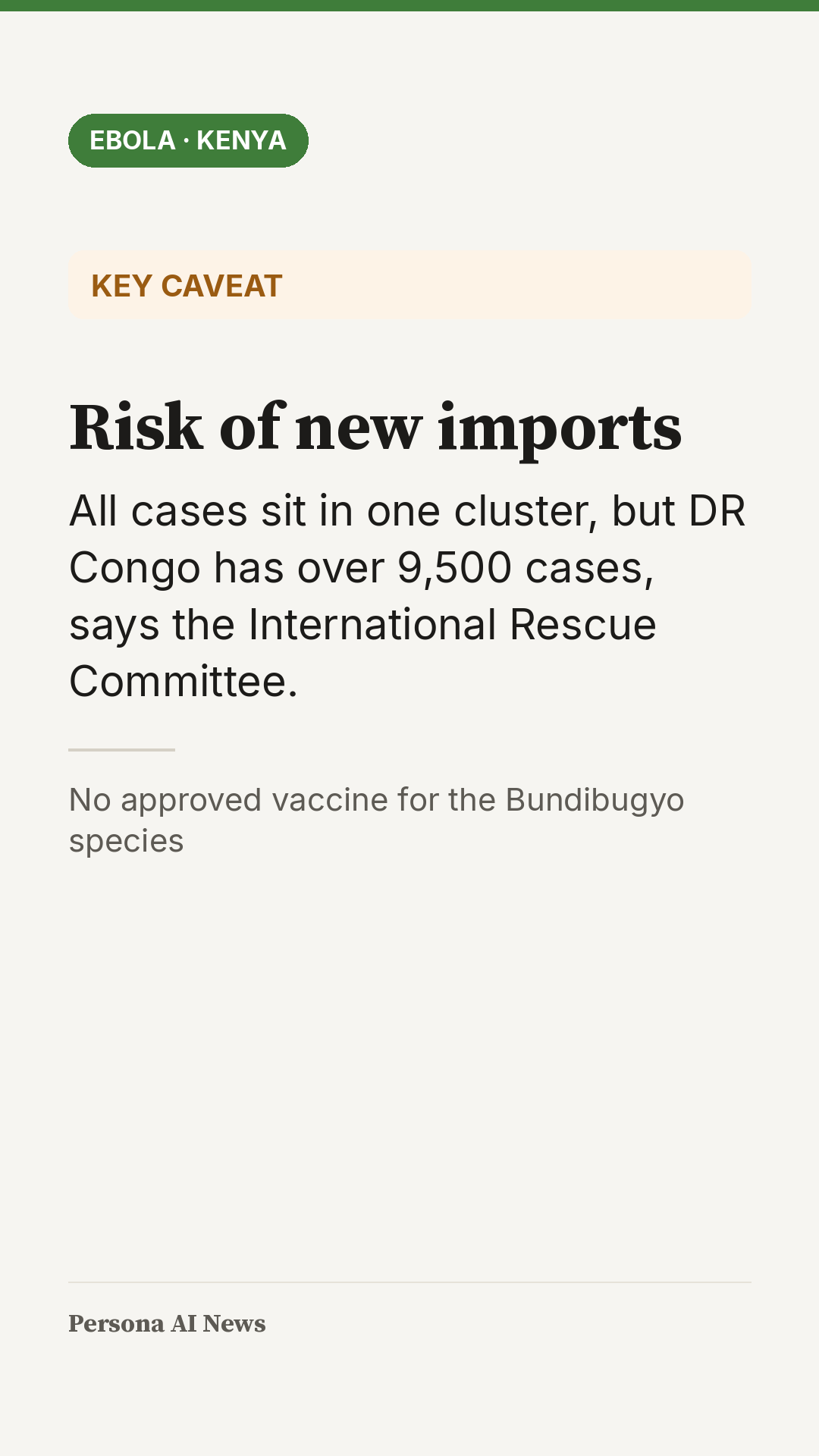
The ministry says all cases belong to one cluster, with no evidence of community spread. But with more than 9,500 cases in DR Congo, Kenya faces a steady risk of new imported cases, according to the International Rescue Committee, an aid group. For the Bundibugyo species of Ebola, no vaccine or treatment is approved; trials are under way.
Nigeria's health minister, Ali Pate, said the country's only confirmed case appears genetically related to a strain identified earlier in Kenya; further testing is under way. Investigators are checking whether Nigeria's case crossed paths with Kenya's first patient; both are believed to have travelled through Uganda's Entebbe airport.
The cards of this story
from the video, click to enlarge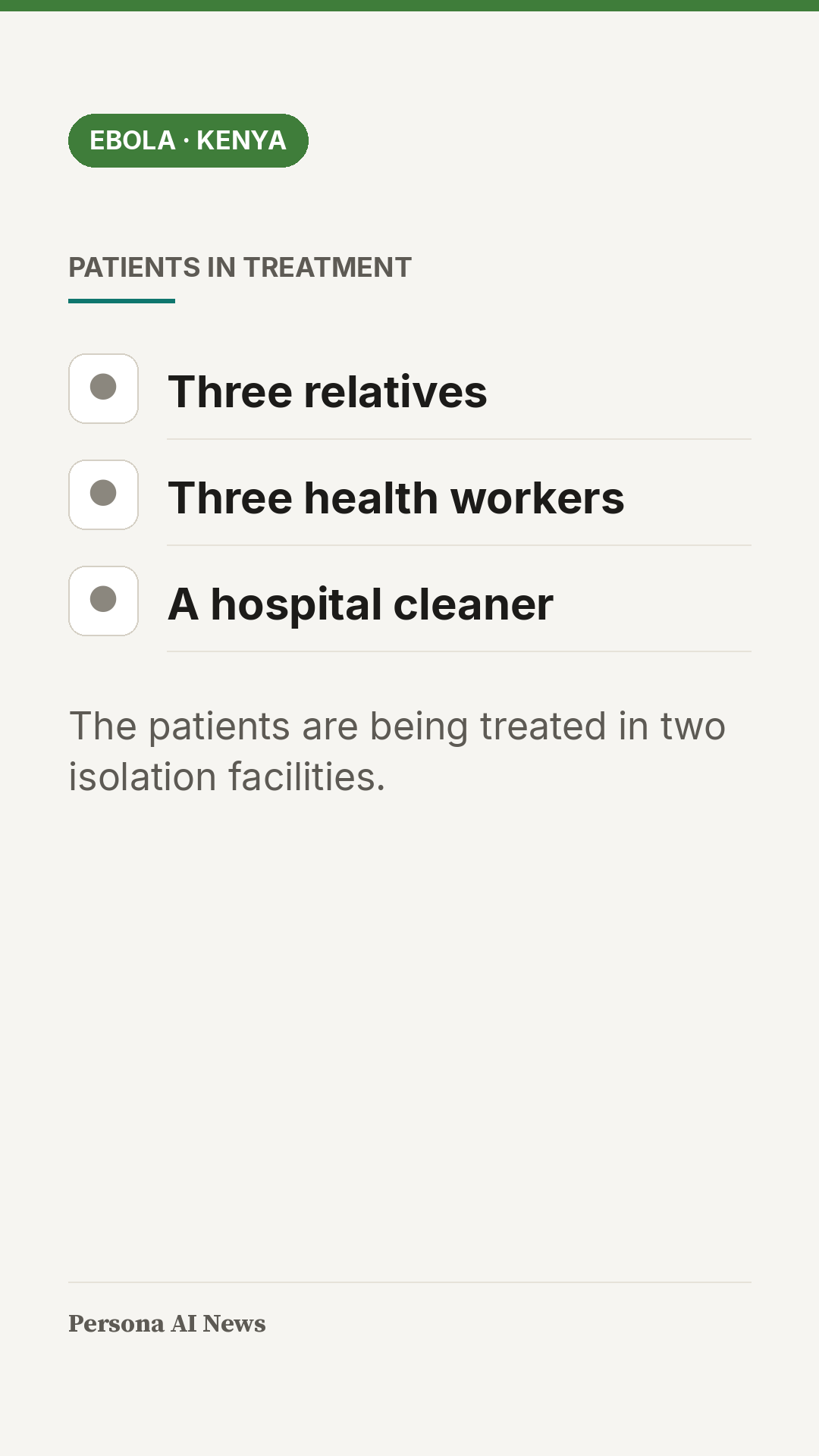
Sober, fact-rich report on Kenya's Ebola cluster with containment measures and open questions, but few real solutions and no clear progress beyond screening and trials.
The text gives concrete numbers, dates and sources, and it names response measures such as quarantine, isolation wards, digital traveller screening and ongoing trials. It is honest about limits: no approved vaccine or treatment exists, imported cases remain a risk, and the link to Nigeria's case is still unclear. What it lacks is a real solution or progress story, for example evidence that the measures work or how other outbreaks were contained. Adding such context and expert views on what helps would raise the score.
AI assessment by fixed criteria. How we score →