Uganda Orders Ebola Quarantine for Citizens Returning from Congo
Ugandans coming home after a trip to the Democratic Republic of Congo must now spend 21 days in quarantine, and pay for it themselves. Uganda's health ministry announced the rule on Sunday, 25 October. Its neighbour, a large central African country, is facing the worst Ebola outbreak in its history. Ebola is a virus spread through contact with bodily fluids that causes severe haemorrhagic fever.
DR Congo has recorded more than 4,600 Ebola deaths since it declared the outbreak in May; across Africa the virus has killed more than 15,000 people over the last 50 years. Uganda itself had 20 cases, including two deaths, almost all among people returning from visits to DR Congo, before the World Health Organization declared it Ebola-free in August. The ministry says it has also intensified screening of travellers at Entebbe International Airport, near the capital Kampala, at all land border crossings and at designated road checkpoints.
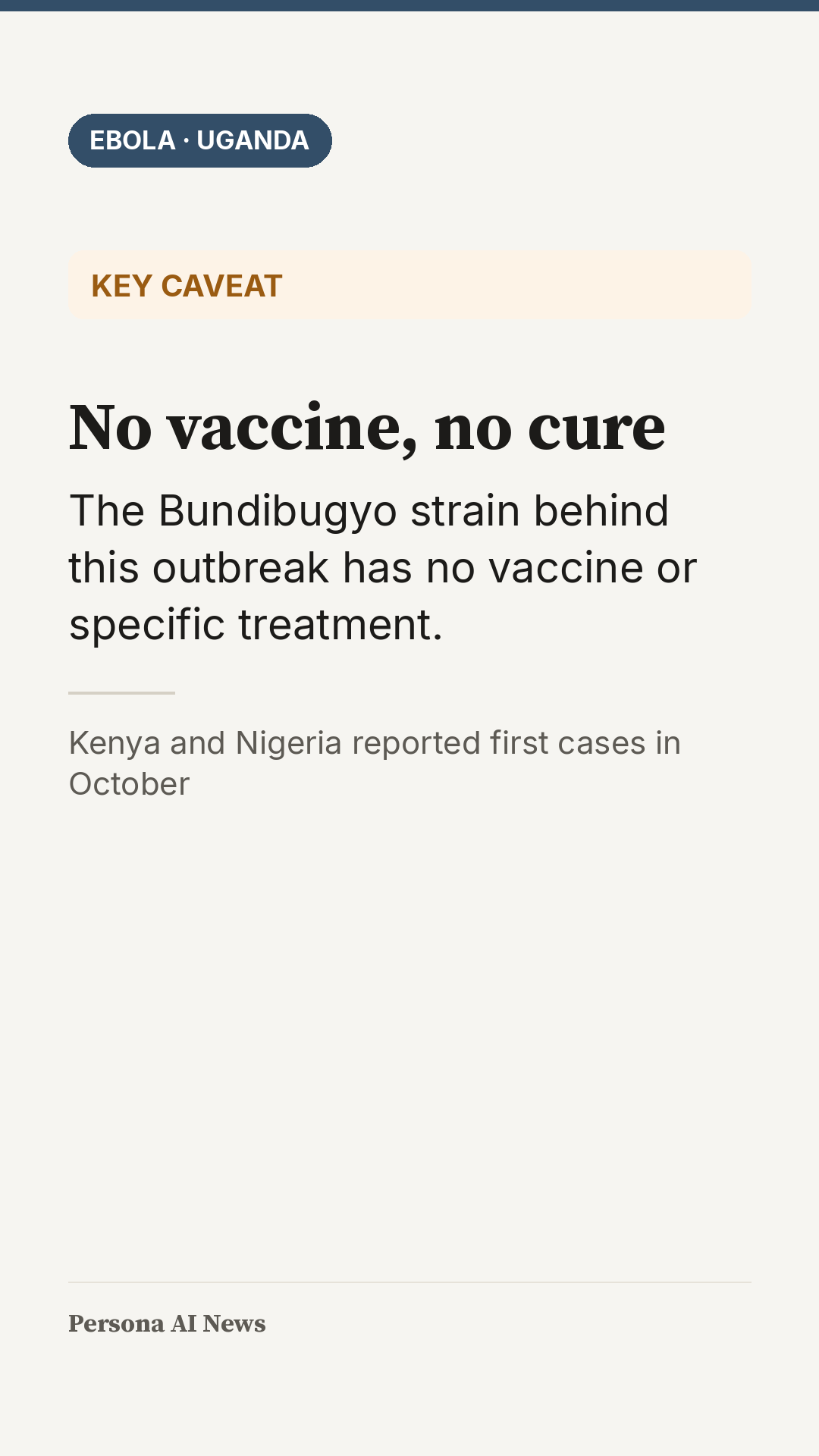
The outbreak is caused by the Bundibugyo strain, for which there is no vaccine or specific treatment. The ministry's rule names only returning Ugandans, not other travellers. Kenya, where two people have died, and Nigeria reported first cases in October. Nigeria's first patient had flown in from Uganda; a Ugandan government spokesperson rejected the idea that she was infected there.
Uganda's health ministry, which issued the rule, has named no end date and no date for a review. Until it decides otherwise, every Ugandan returning from DR Congo goes into quarantine, while screening continues at Entebbe airport, land borders and road checkpoints.
The cards of this story
from the video, click to enlarge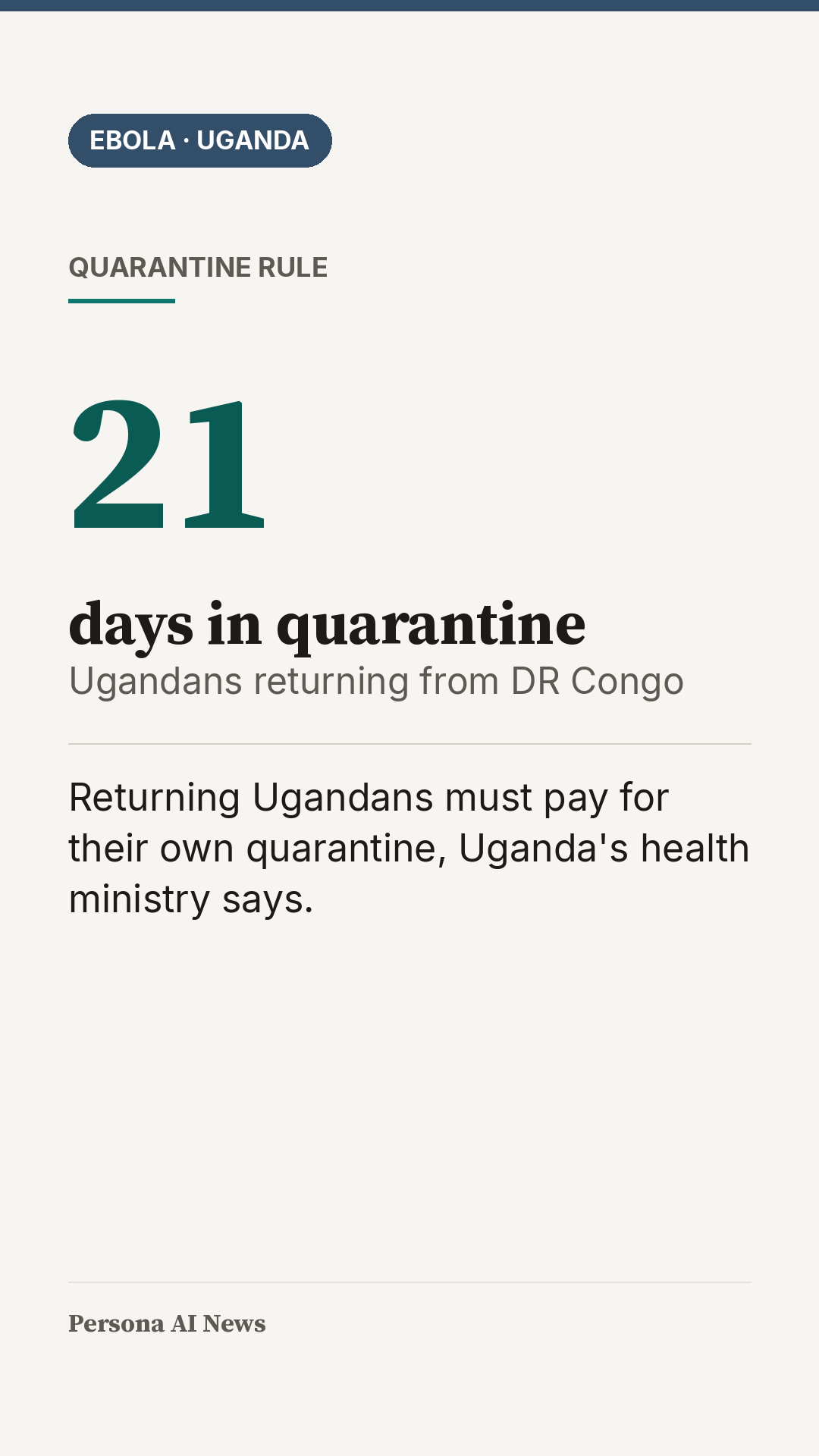
Sober, fact-rich report on a concrete public health measure, with honest gaps, but little evidence on whether quarantine works or who bears the costs.
The text describes a concrete response, a 21-day paid quarantine plus stepped-up screening, and backs it with figures such as 4,600 deaths, 20 Ugandan cases and the August WHO all-clear. It is honest about limits: no vaccine or treatment exists, the rule covers only returning Ugandans, and no end or review date is set. What is missing is evidence that the measure works, expert voices, and a look at the burden of paying for one's own quarantine. Such context would raise the score.
AI assessment by fixed criteria. How we score →