Audi Plans SUV Assembly Plant in Georgia
Audi, the German carmaker owned by Volkswagen, plans to build a 4 billion dollar assembly plant in the US state of Georgia. President Donald Trump announced the investment on Saturday at a campaign rally in Perry, Georgia, as the German broadcaster DW reported on 25 October. Trump credited his tariffs on car imports for the decision. Georgia is a battleground state in next month's midterm elections.
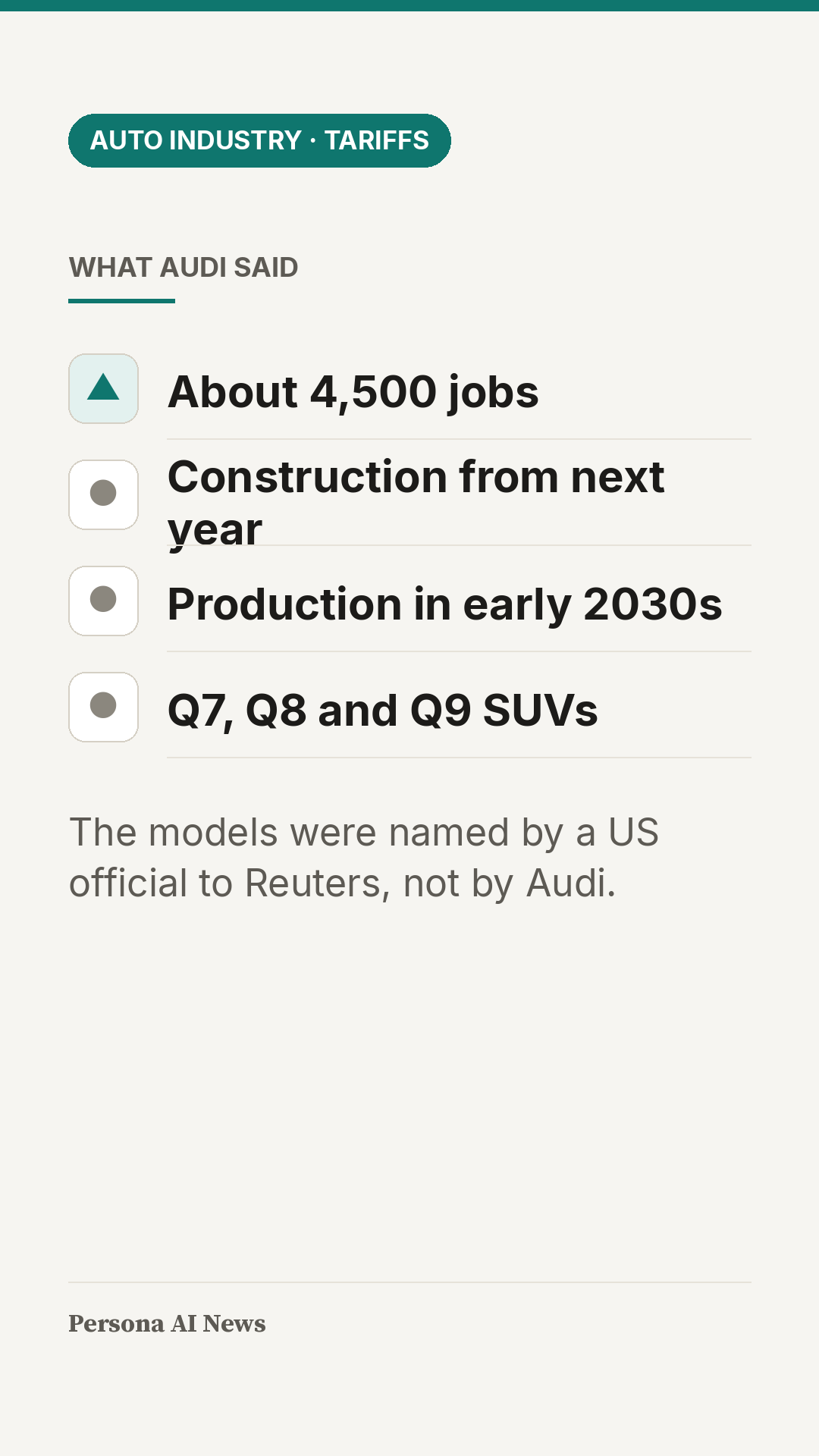
A US official told the Reuters news agency that the plant is expected to assemble Audi's Q7, Q8 and Q9 SUVs, or sport utility vehicles. Audi said construction is scheduled to begin next year, with car production starting in the early 2030s, and that the investment will create approximately 4,500 jobs. DW reported that Trump's tariffs on car imports cost Audi money last year, as part of a campaign to press foreign and domestic businesses to move production to the United States.
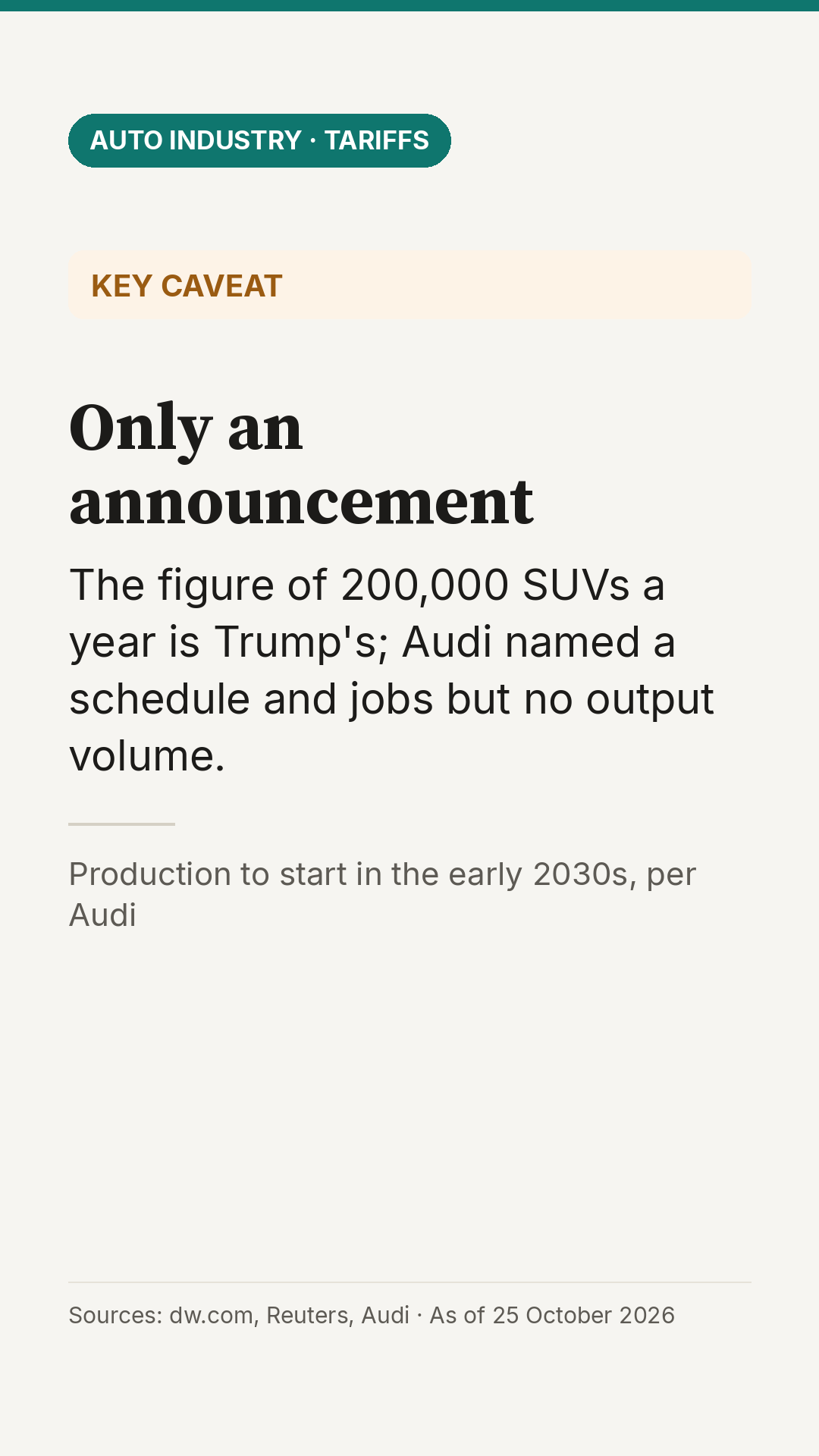
The output of 200,000 SUVs a year is Trump's figure, given at a campaign rally; in DW's report, Audi named the schedule and the jobs but no production volume. The plan is an announcement, and cars would roll off the line only after years of construction. DW's report names no site, no public subsidies and no breakdown of costs.
Georgia votes in the midterm elections on November 3, in which Republicans are bracing for losses amid rising prices and the war in Iran, according to DW. For the plant itself, the next step Audi has named is the start of construction, scheduled for next year.
The cards of this story
from the video, click to enlarge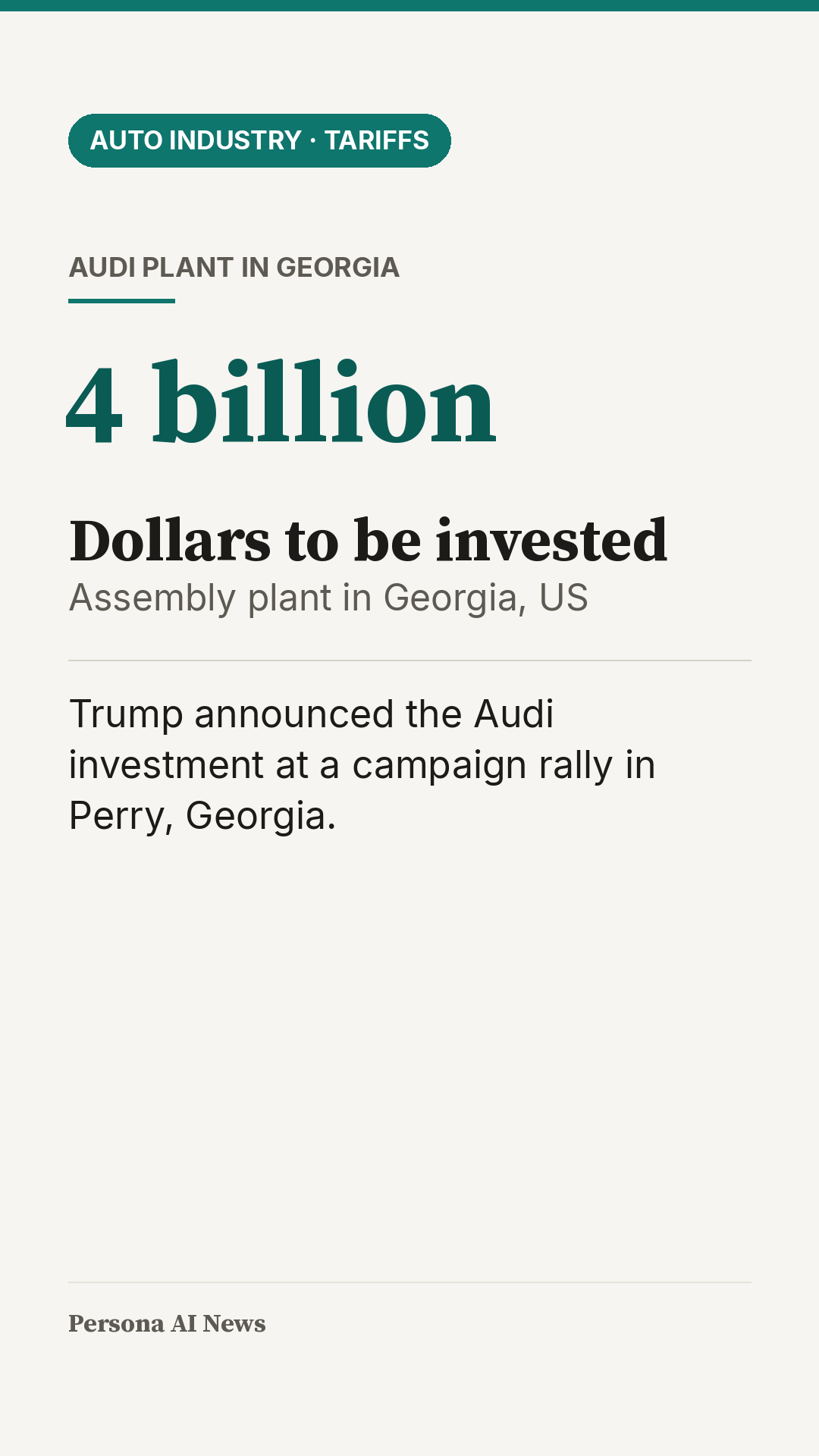
Sober, well-sourced report on an investment announcement with figures and clear caveats, but it is mostly news reporting rather than solution-focused journalism.
The text names concrete facts: a 4 billion dollar investment, about 4,500 jobs, a construction start next year and production in the early 2030s. It attributes claims to sources (DW, Reuters, Audi) and openly flags that the 200,000 vehicle figure comes only from Trump and that no site, subsidies or costs are named. What keeps the score moderate is that it reports a political announcement rather than a solution to a problem, and it offers little on the economic effects, trade-offs or independent assessments. Expert views on the tariff effects or the real job impact would raise it.
AI assessment by fixed criteria. How we score →