Fed Holds Rates Steady as Inflation Keeps Climbing
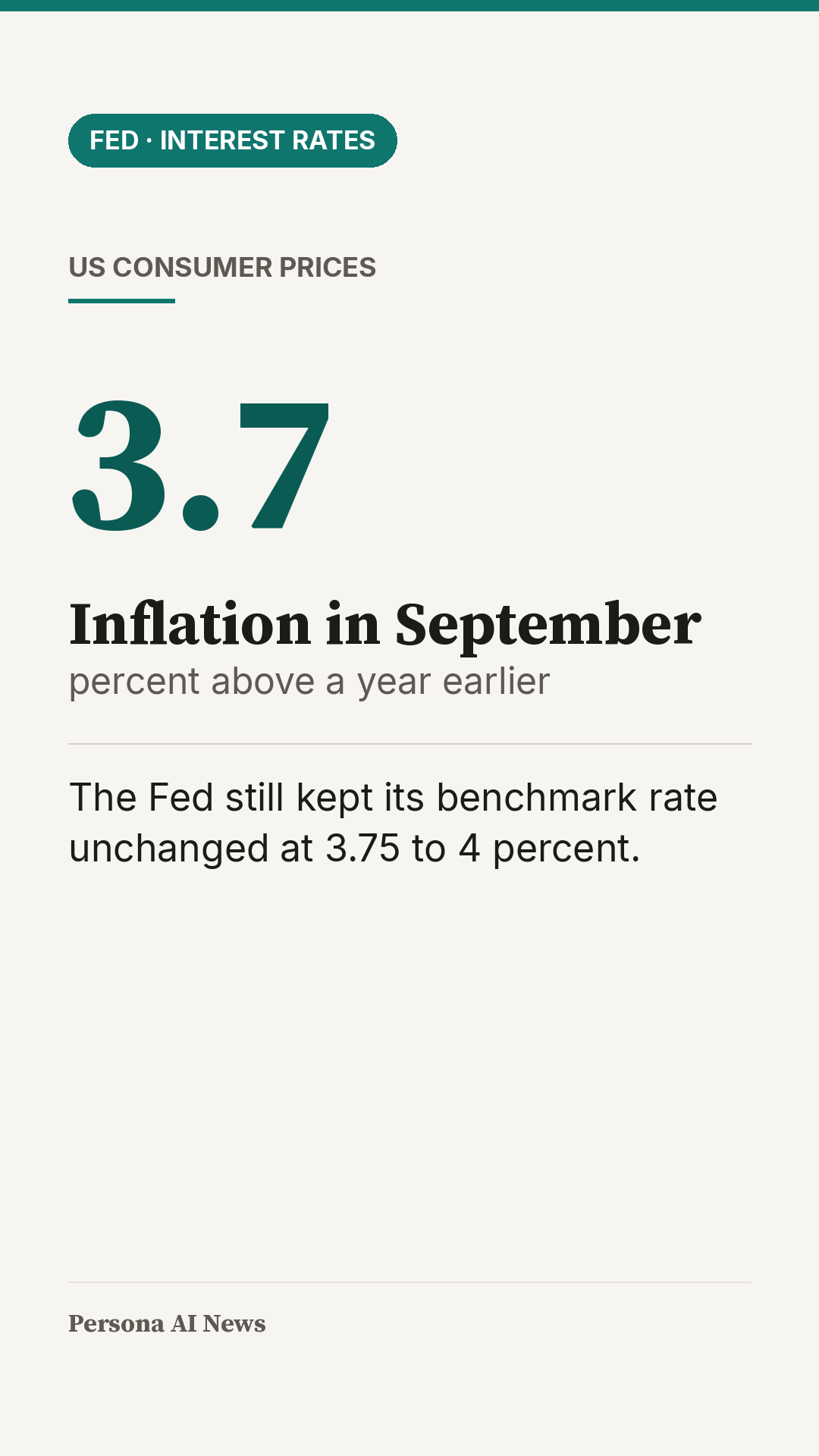
The Federal Reserve, the central bank of the United States, raised interest rates in September. On Wednesday, 28 October, it kept its benchmark rate unchanged at 3.75 to 4 percent, although consumer prices in September were 3.7 percent higher than a year earlier. The central bank renewed its pledge of price stability, a goal made harder by a spike in energy prices tied to the US war with Iran.
Two members of the rate-setting committee wanted to move faster. Fed governor Lisa Cook and Beth Hammack of the Cleveland Federal Reserve Bank voted for an increase of a quarter percentage point, while the majority chose to hold. The September increase had been the first in more than three years. The benchmark rate shapes the cost of short-term loans such as credit cards. Mortgage rates reached 7.4 percent earlier in October, a three-year high, and the housing market has been in a slump for four years.
Rate increases reach only part of the economy. Dan North, senior economist at the insurer Allianz Trade, says AI companies "don't care what interest rate they have to pay." Average wages rose 3 percent in the 12 months to September, 0.7 percentage points below inflation; Mark Zandi of Moody's Analytics says purchasing power of lower and middle-income Americans is declining.
The next decision comes at the committee's December meeting, where policymakers are widely expected to raise the benchmark rate to curb demand. Votes in the midterm election are tallied less than a week after Wednesday's decision; North said a hike before them "would be suspicious."
The cards of this story
from the video, click to enlarge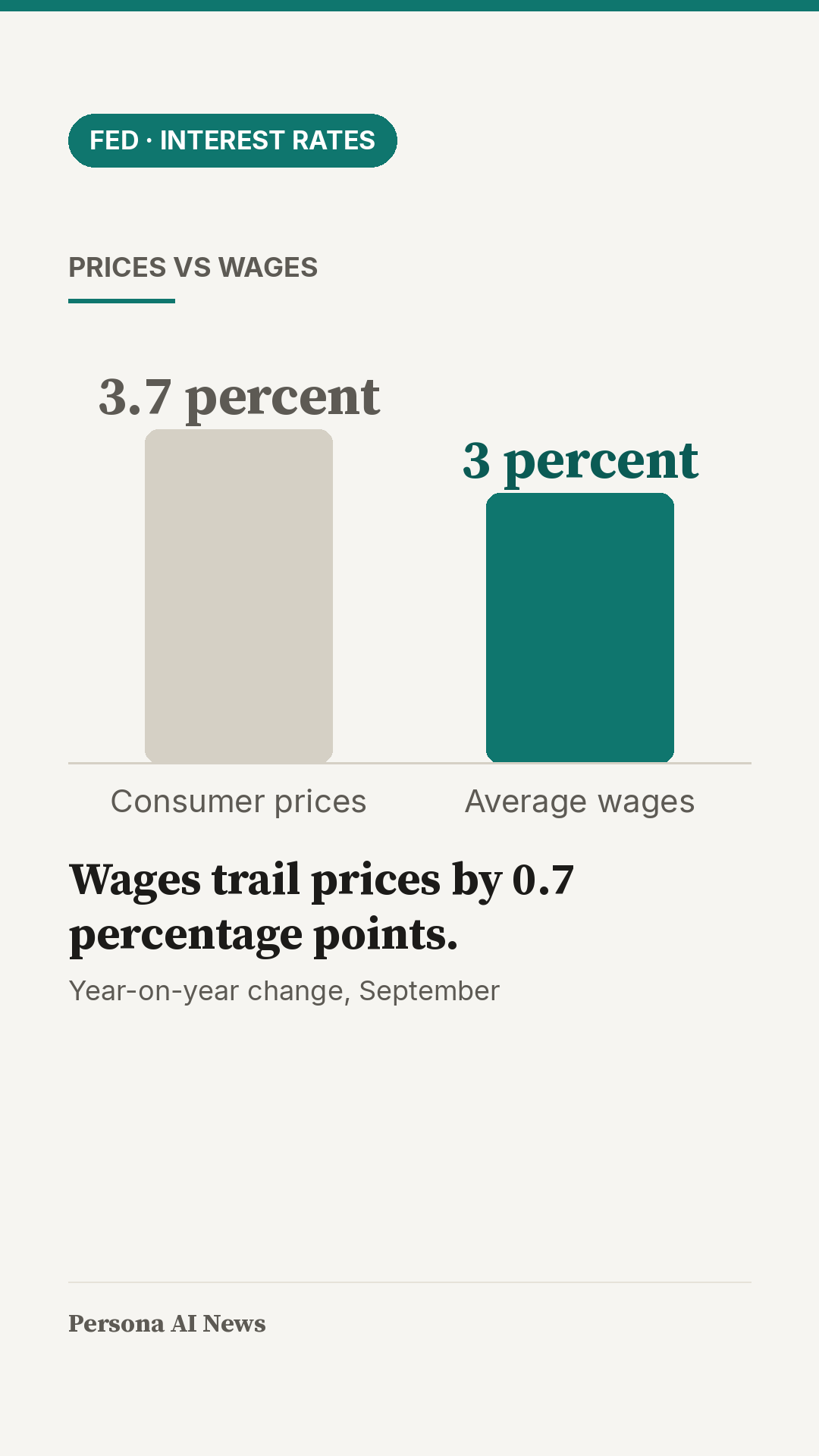
The text is well sourced and balanced about the Fed's rate decision, but the policy response is shown as a limited tool and no broader solutions appear.
The text gives many concrete figures (3.7 percent inflation, 3.75 to 4 percent rate, 7.4 percent mortgages, wages up 3 percent) and quotes economists. It also admits limits: rate hikes reach only part of the economy, and falling purchasing power remains unsolved. The Fed's stance on price stability is the only 'response', and it is more a description of a decision than a real solution. The score would rise with examples of measures that help affected households, evidence that the policy works, or a clearer look at options beyond rate changes.
AI assessment by fixed criteria. How we score →