Bristol Old Vic Takes Free Theatre Into Classrooms
Young actors from Bristol Old Vic, a theatre in the English city of Bristol, performed a play about British identity in the hall of City Academy, a secondary school in east Bristol. The show is part of a free tour into schools by the theatre's young company. As the Guardian reported on 18 October, organisers now expect to reach up to 4,000 pupils, after first aiming for about 1,000.
The theatre's young company is touring two new plays to secondary schools across Bristol and the surrounding area. At City Academy it staged A Brit?ish Museum, a 30-minute play by Muneera Pilgrim about belonging and colonial history. Of the school's 970 pupils in 2024/25, 44.3 percent spoke English as an additional language, against a national average of 19.2 percent. Lucy Hunt, the theatre's engagement director, said that "the best way to get theatre to everybody is to bring work in."
The tour covers only 19 schools in and around Bristol, while schools across the country face tight budgets for theatre trips. The Guardian report does not say what the tour costs or who pays for it. Evidence of its effect rests on reactions from pupils and a teacher, and the expected reach is the organisers' forecast, not a count.
Next, the company also aims to reach home-educated groups and pupils in hospital education. The Guardian report names no end date for the tour and no date for a count of the pupils actually reached.
The cards of this story
from the video, click to enlarge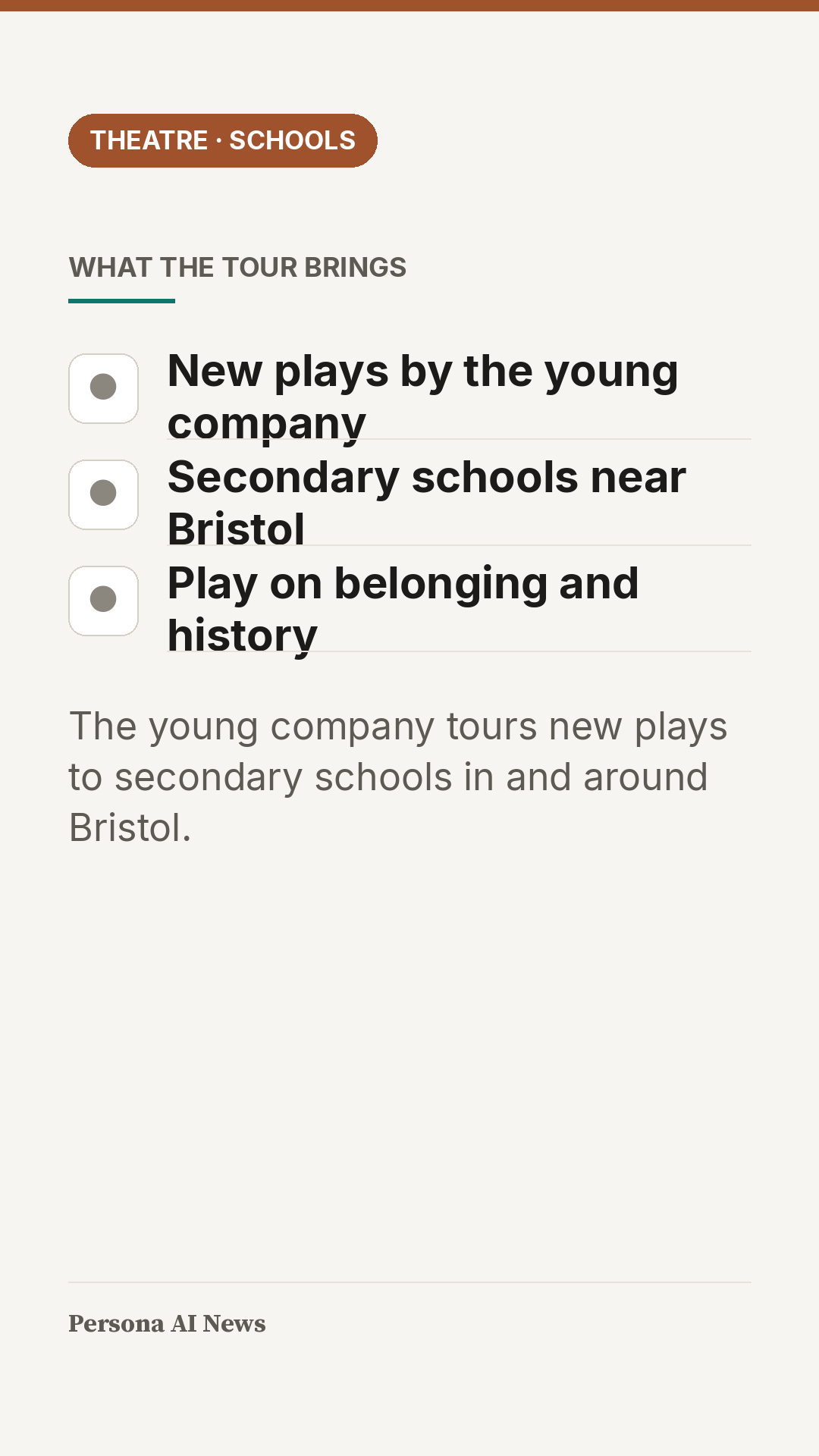
The text describes a free school theatre tour with concrete figures and openly states its limits, such as unknown costs, forecast-only reach and no end date.
The text presents a practical answer to unequal access to theatre: bringing plays into schools for free. It backs this up with numbers, such as 970 pupils, 44.3 percent speaking English as an additional language, 19 schools and a target of up to 4,000 pupils. It also names its limits honestly: costs and funding are unclear, the reach is only a forecast, and the evidence of impact rests on a few reactions. The score would rise with a real count of pupils reached, cost and funding details, and some measured results beyond anecdotes.
AI assessment by fixed criteria. How we score →