Israel's Election Leaves Both Blocs Short of a Majority
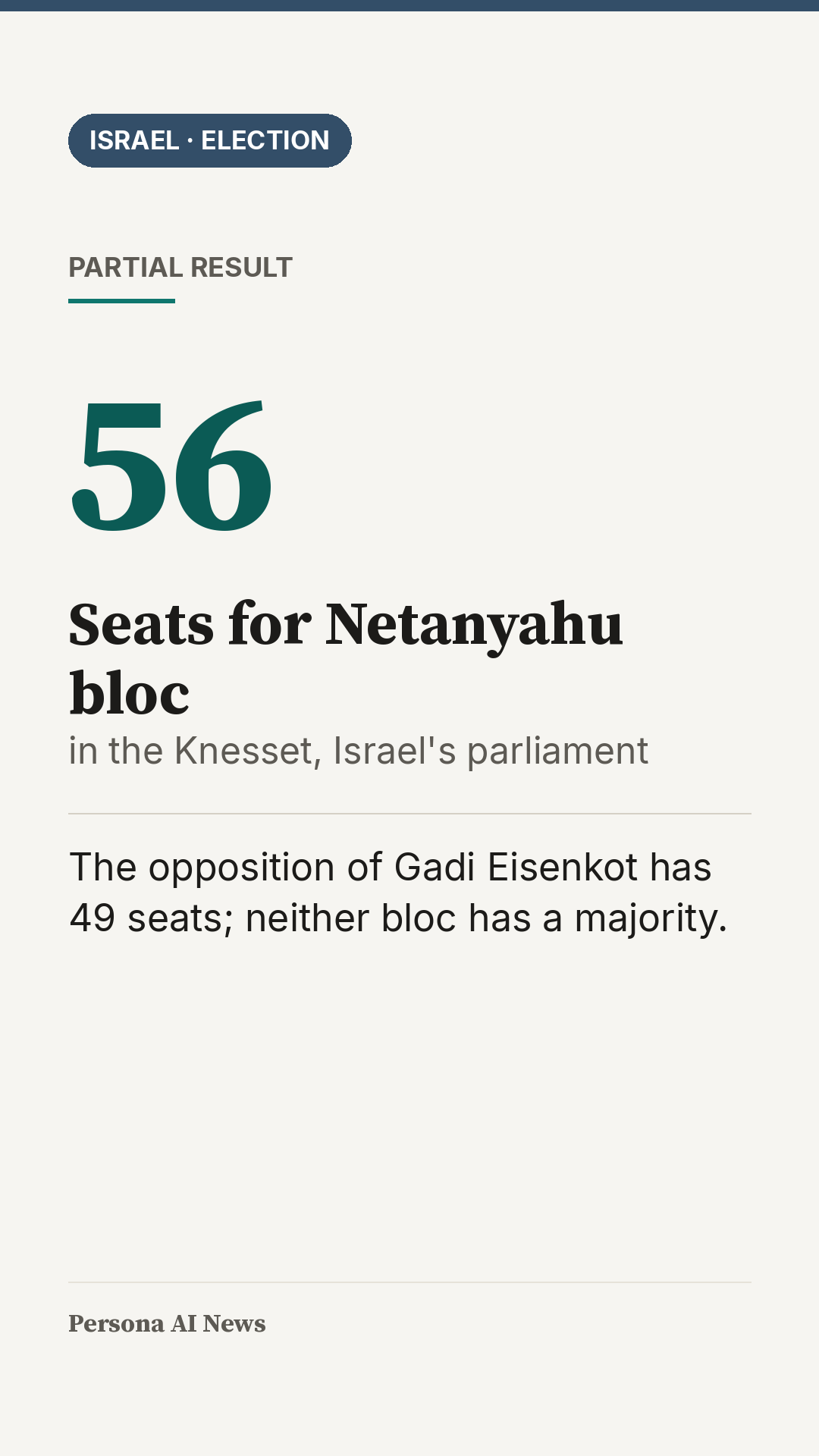
Both camps in Israel's general election claim a mandate, and neither has a majority. Partial results from the Central Elections Committee, which runs Israeli elections, gave Prime Minister Benjamin Netanyahu's bloc 56 seats in the Knesset, Israel's parliament, against 49 for the opposition of his main rival, the centrist former military chief Gadi Eisenkot, Euronews reported on 27 October. Earlier exit polls had shown the two blocs roughly level.
Arab parties, whose constituents make up 20 percent of Israel's population, were projected to win 15 seats, a sharp gain; some Arab communities reported near-universal turnout. Overall turnout exceeded 77 percent, according to the committee, in Israel's first election since the Hamas attacks of 7 October 2023. Netanyahu's Likud would be the largest single party with 27 seats. The three main television networks gave each bloc around 51 seats in their exit polls, after Channel 13 first projected the opposition ahead.
The seat figures rest on 50 percent of the votes counted, and Euronews notes they are likely to change. Eisenkot said during the campaign he would not govern with Arab lawmakers, and Netanyahu called a partnership with Arab parties treasonous. Arab members could still back an Eisenkot minority government without joining it; otherwise, Israel could face new elections.
The next step is the full count by the Central Elections Committee. After that, coalition talks decide the outcome: Arab leader Mansour Abbas says he is open to working with Eisenkot, while far-right politician Itamar Ben Gvir warned Netanyahu against a unity government with his rival.
The cards of this story
from the video, click to enlarge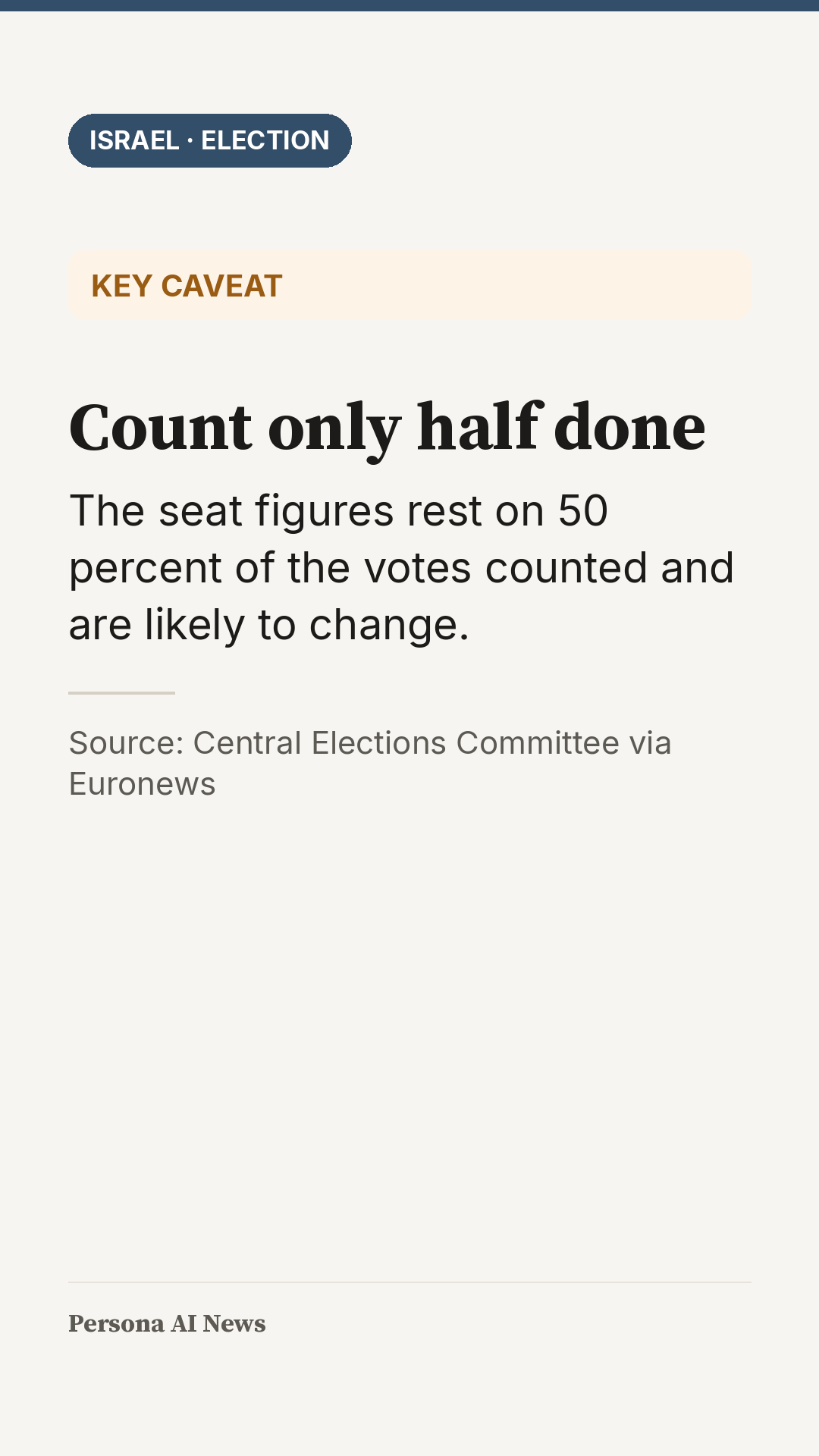
Well sourced and candid about uncertainty, but it is plain election reporting that mostly describes a deadlock and offers little real solution or progress.
The text gives concrete numbers (seats, turnout, share of votes counted) and names its sources. It is also honest that the results are partial and likely to change. It does lay out possible paths, such as Arab parties backing a minority government or new elections, but these are open options, not solutions. The score would rise with more on how similar deadlocks were resolved or what voters and parties are proposing to break the impasse.
AI assessment by fixed criteria. How we score →