Lula and Bolsonaro Court Undecided Voters Before Runoff
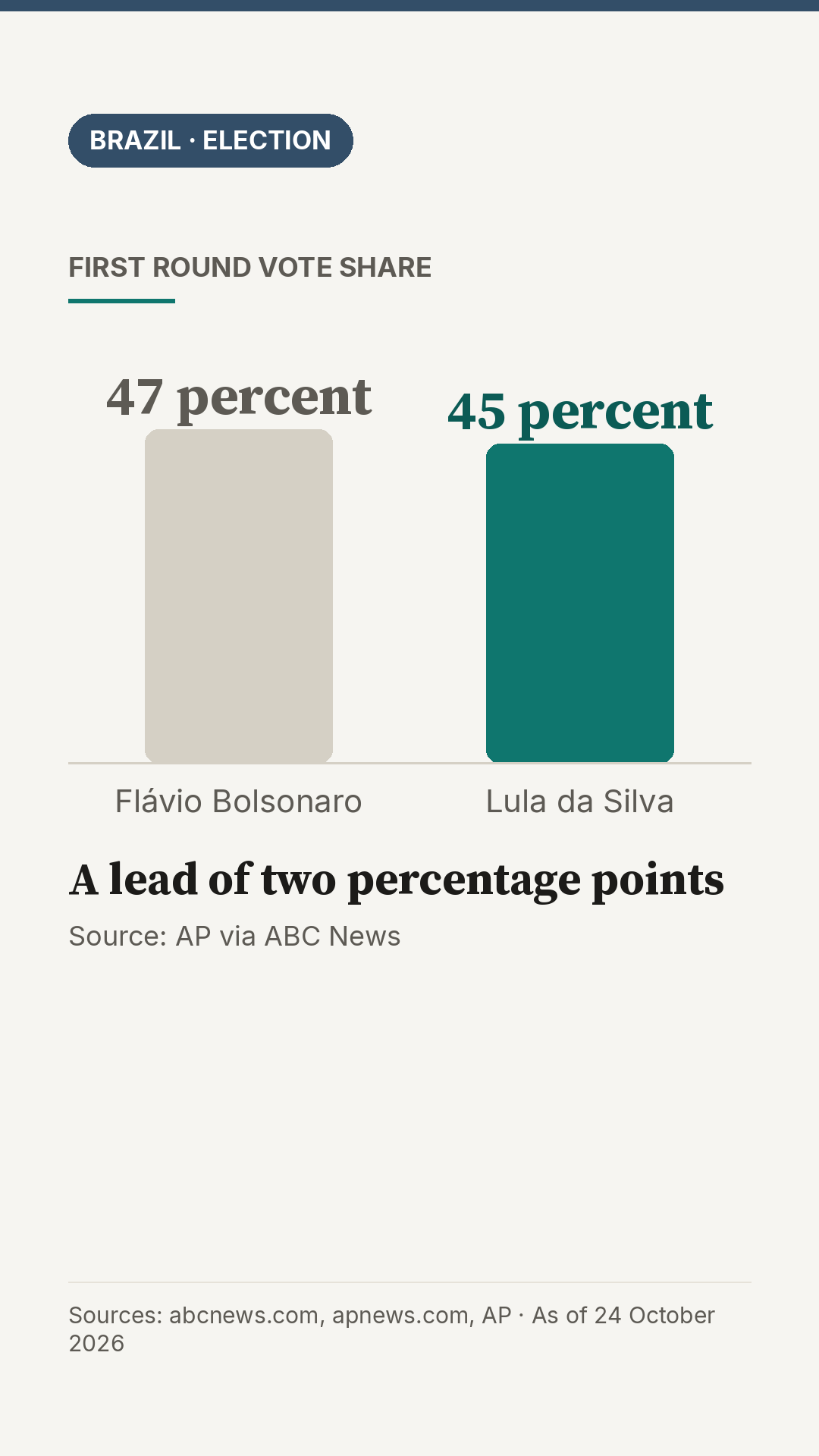
Senator Flávio Bolsonaro, the son of former President Jair Bolsonaro, won the first round of Brazil's presidential election with 47 percent of the vote against 45 percent for President Luiz Inácio Lula da Silva. On Friday the two met in Rio de Janeiro for their final television debate before Sunday's runoff, the Associated Press reported on 24 October, reaching out to the few voters still undecided.
The two-hour debate ran on TV Globo, Brazil's most popular broadcaster, five days after a first debate on TV Band in which the candidates traded accusations. AP counted three tense moments. Bolsonaro called the 80-year-old Lula "nine fingers", a nickname referring to an accident from his years as a metal worker, and apologized when Lula demanded it. Lula called him a vigilante, alluding to police-linked militias in poor areas of Rio. The candidates also discussed the minimum wage, public security, free healthcare and incentives for agribusiness.
Bolsonaro's first-round lead was two percentage points. AP describes recent polls only as showing a very close race and gives no figures, nor says how many voters are still undecided. Whether either televised debate changed minds is not measured. According to AP, a Bolsonaro win would increase US influence in Latin America.
Both candidates are expected to lead rallies of tens of thousands of supporters in Rio de Janeiro and São Paulo on Saturday. Voters decide on Sunday who will govern Latin America's biggest economy, with 214 million people; Lula is seeking a fourth, nonconsecutive term.
The cards of this story
from the video, click to enlarge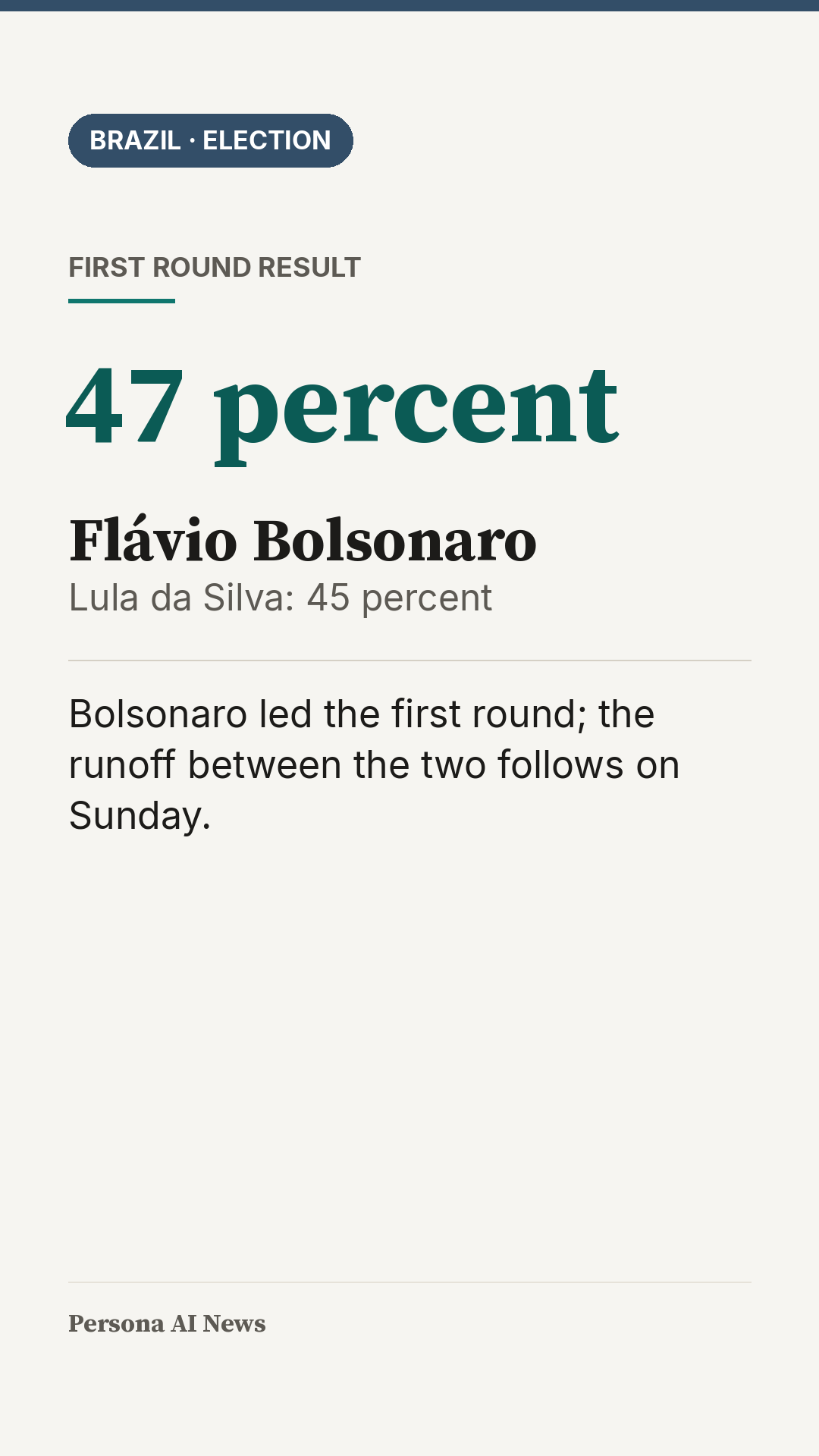
A factual, sober election report with concrete figures and honest gaps, but it describes a contest and offers no solution, progress or response to a problem.
The text gives clear numbers (47 versus 45 percent, debate details, population size) and openly says that poll figures and the debates' effect on voters are unknown. Its tone is calm and it avoids hype. However, it is straightforward event coverage: it names no problem being solved, no policy outcome and no way forward. Adding how the candidates' proposals on wages, security or healthcare would work, with evidence, would raise the score.
AI assessment by fixed criteria. How we score →